Women’s disease and treatment we offer
in our clinic
|
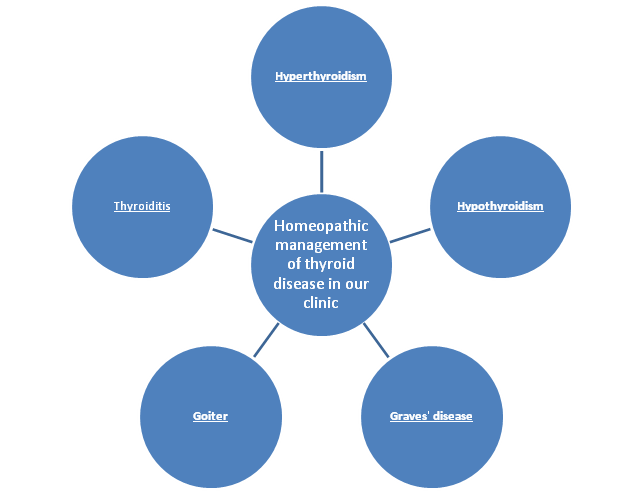
THYROID
DISEASE
Your thyroid (THY-roid) is a small gland found
at the base of your neck, just below your Adam's
apple. The thyroid produces two main
hormones
called
T3 and T4. These hormones travel in your blood
to all parts of your body. The thyroid hormones
control the rate of many activities in your
body. These include how fast you burn calories
and how fast your heart beats. All of these
activities together are known as your body's
metabolism.
A thyroid that is working right will produce
the right amounts of hormones needed to keep
your body’s metabolism working at a rate that
is not too fast or too slow.
What kinds
of thyroid problems can affect women?
Women are more likely
than men to develop thyroid disorders. Thyroid
disorders that can affect women include:
-
Disorders that cause
hyperthyroidism
-
Disorders that cause
hypothyroidism
-
Thyroid nodules
-
Thyroiditis
-
Thyroid cancer
-
Goiter
 Go to Top
Some disorders cause
the thyroid to make more thyroid hormones than
the body needs. This is called hyperthyroidism,
or overactive thyroid. The most common cause
of hyperthyroidism is Graves' disease. Graves’
disease is an autoimmune disorder, in which
the body's own defense system, called the immune
system, stimulates the thyroid. This causes
it to make too much of the thyroid hormones.
Hyperthyroidism can also be caused by thyroid
nodules that prompt excess thyroid hormones
to be made.
Symptoms
At first, you might not notice symptoms of hyperthyroidism.
They usually begin slowly. But over time, a
speeded up metabolism can cause symptoms such
as:
-
Weight loss, even if you eat the same or
more food
-
Eating more than usual
-
Rapid or irregular heartbeat or pounding
of your heart
-
Anxiety
-
Irritability
-
Trouble sleeping
-
Trembling in your hands and fingers
-
Increased sweating
-
Increased sensitivity to heat
-
Muscle weakness
-
More frequent bowel movements
-
Less frequent menstrual periods with lighter
than normal menstrual flow
In addition to these symptoms, people with hyperthyroidism
may have
osteoporosis,
or weak, brittle bones. In fact, hyperthyroidism
might affect your bones before you have any
of the other symptoms of the disorder. This
is especially true of postmenopausal women,
who are already at high risk of osteoporosis.
Hypothyroidism is
when your thyroid does not make enough thyroid
hormones. It is also called underactive thyroid.
The most common cause of hypothyroidism in the
United States is
Hashimoto's disease. Hashimoto’s disease
is an autoimmune disease, in which the immune
system mistakenly attacks the thyroid. This
attack damages the thyroid so that it does not
make enough hormones. Hypothyroidism also can
be caused by:
-
Treatment of hyperthyroidism
-
Radiation treatment
of certain cancers
-
Thyroid removal
In rare cases, problems
with the
pituitary gland
can cause the thyroid to be less active.
Symptoms
Symptoms of hypothyroidism tend to develop slowly,
often over several years. At first, you may
just feel tired and sluggish. Later, you may
develop other symptoms of a slowed down metabolism,
including:
-
Weight gain, even
though you are not eating more food
-
Increased sensitivity
to cold
-
Constipation
-
Muscle weakness
-
Joint or muscle
pain
-
Depression
-
Fatigue (feeling
very tired)
-
Pale dry skin
-
A puffy face
-
A hoarse voice
-
Excessive menstrual
bleeding
In addition to these
symptoms, people with hypothyroidism may have
high blood levels of LDL cholesterol. This is
the so-called "bad" cholesterol, which can increase
your risk for
heart disease.
Nine foods to avoid
in hypothyroidism
Hypothyroidism
can be a tricky condition to manage, and what
you eat can interfere with your treatment. Some
nutrients heavily influence the function of
the thyroid gland, and certain foods can inhibit
your body's ability to absorb the replacement
hormones you may take as part of your thyroid
treatment. There's no such thing as a "hypothyroidism
diet" that will make you well, but eating smart
can help you feel better despite the condition.
Here are nine foods to limit or avoid as you
manage hypothyroidism.
NINE
FOODS TO AVOID IN HYPOTHYROIDISM
|
|
1.
Soy
|
|
2.
Cruciferous
vegetables, such as broccoli and cabbage
|
|
3.
Gluten,
a protein found in foods processed from
wheat, barley, rye, and other grains
|
|
4.
fats
|
|
5.
Sugary
Foods
|
|
6.
Processed
foods
|
|
7.
Caffeine
|
|
8.
Alcohol
|
|
9.
Tapioca
|
1.
Soy
The hormone estrogen can
interfere with
your body's ability to use thyroid hormone,
Soy is loaded with plant-based phytoestrogen,
and some researchers believe too much soy may
increase a person's risk for hypothyroidism.
People with hypothyroidism should moderate their
intake of soy. However, because soy hasn't been
definitively linked to hypothyroidism, there
are no specific dietary guidelines.
2.
Cruciferous vegetables
Cruciferous vegetables, such as broccoli, cauliflower
and cabbage, can interfere with the production
of thyroid hormone, particularly people who
have an iodine deficiency. Digesting these vegetables
can block the thyroid's ability to absorb iodine,
which is essential for normal thyroid function.
People
with hypothyroidism
may want to limit their intake of broccoli,
Brussels sprouts, cabbage, cauliflower, kale,
turnips, and bok choy. Proper Cooking the vegetables
can reduce the effect that cruciferous vegetables
have on the thyroid gland. Limiting your intake
to 5 ounces a day appears to have no adverse
effect on thyroid function.
3.
Gluten
People with hypothyroidism should consider minimizing
their intake of
gluten,
a protein found in foods processed from wheat,
barley, rye, and other grains. Gluten can irritate
the small intestine and may hamper absorption
of thyroid hormone replacement medication.
4.
Fats
They have been found to disrupt the body's ability
to absorb thyroid hormone replacement medicines.
Fats may also interfere with the thyroid's ability
to produce
hormone
as well. Some health care professionals recommend
that you cut out all fried foods and reduce
your intake of fats from sources such as butter,
mayonnaise, margarine, and fatty cuts of meat.
5.
Sugary Foods
Hypothyroidism can cause the body's metabolism
to slow down. That means it's easy to put on
pounds if you aren't careful. "You want to avoid
the foods with excess amounts of sugar because
it's a lot of calories with no nutrients," she
says. It's best to reduce the amount of sugar
you eat or try to eliminate it completely from
your diet.
6.
Processed foods tend to have a lot of sodium,
and people with hypothyroidism should avoid
sodium. Having an
underactive thyroid
increases a person's risk for high blood pressure,
and too much sodium further increases this risk.
Read the Nutrition Facts label on the packaging
of processed foods to find options lowest in
sodium. People with an increased risk for high
blood pressure should restrict their sodium
intake to 1,500 milligrams a day, according
to the U.S. Centers for Disease Control and
Prevention.
7.
Caffeine has been found to block absorption
of thyroid hormone replacement. People who were
taking their thyroid medication with their morning
coffee had uncontrollable
thyroid levels.
8.
Alcohol
Alcohol consumption can wreak havoc on both
thyroid hormone levels in the body and the ability
of the thyroid to produce hormone. Alcohol appears
to have a
toxic effect
on the thyroid gland and suppresses the
ability of the body to use thyroid hormone.
Ideally, people with hypothyroidism should cut
out alcohol completely or drink in careful moderation.
9.
Tapioca: Cassava bears special mention here.
You may have heard of it because it is the starchy
root vegetable from which tapioca is made, but
cassava is also a popular staple food in many
Third World countries, where it is eaten boiled,
mashed, or ground into flour. Fresh cassava
root contains a harmless substance called
linamarin,
which can turn into hydrocyanic acid
(aka
cyanide!) when the plant is damaged
or eaten. Flaxseeds also contain linamarin.
Cyanide is very toxic, so the human body
converts it into thiocyanate (which, although
it does interfere with thyroid function, is
less toxic than cyanide and easier for the body
to eliminate).
Thiocyanates are
sulfur-containing compounds found in a variety
of popular vegetables. Thiocyanates make it
harder for the thyroid gland to absorb iodine
because they compete with iodine for entry into
the gland. This effect can be minimized
by supplementing the diet with iodine; the excess
iodine can then crowd out the thiocyanate and
win the competition. Thiocyanates weaken the
activity of the enzyme
thyroid peroxidase, which is required
to insert iodine into thyroid hormone.
This effect can be greatly reduced by iodine
supplementation.
Thyroid nodule
A thyroid nodule is
a swelling in one section of the thyroid gland.
The nodule can be solid or filled with fluid
or blood. You can have just one thyroid nodule
or many. Most thyroid nodules do not cause symptoms.
But some thyroid nodules make too much of the
thyroid hormones, causing hyperthyroidism. Sometimes,
nodules get to be big enough to cause problems
with swallowing or breathing. In fewer than
10 percent of cases, thyroid nodules are cancerous.
Thyroid nodules are
quite common. By the time you reach the age
of 50, you have a 50 percent chance of having
a thyroid nodule larger than a half inch wide.
We do not know why nodules form in otherwise
normal thyroids.
You can sometimes
see or feel a thyroid nodule yourself. Try standing
in front of a mirror and raise your chin slightly.
Look for a bump on either side of your windpipe
below your Adam's apple. If the bump moves up
and down when you swallow, it may be a thyroid
nodule. Ask your doctor to look at it.
Thyroiditis is inflammation,
or swelling, of the thyroid. There are several
types of thyroiditis, one of which is
Hashimoto's thyroiditis. Other types
of thyroiditis include:
Postpartum
thyroidits
Postpartum thyroiditis
is a phenomenon observed following
pregnancy
and
may involve
hyperthyroidism,
hypothyroidism
or
the two sequentially.
As
in Hashimoto’s thyroiditis, postpartum thyroiditis
is associated with the development of anti-thyroid
(anti-thyroid peroxidase, anti-thyroglobulin)
antibodies. Women with positive antithyroid
antibodies are at a much higher risk of developing
postpartum thyroiditis than women who do not
have have positive antibodies. It is believed
that women who develop postpartum thyroiditis
have an underlying asymptomatic autoimmune thyroiditis
that flares in the postpartum period when there
are fluctuations in immune function.
Like Hashimoto's
disease, postpartum thyroiditis seems to be
caused by a problem with the immune system.
In the United States, postpartum thyroiditis
occurs in about 5 to 10 percent of women.
TWO PHASES OF POSTPARTUM
THYROIDITS
The first phase:
starts 1 to 4 months after giving birth. In
this phase, you may get symptoms of hyperthyroidism
because the damaged thyroid is leaking thyroid
hormones out into the bloodstream. The thyrotoxic
phase occurs 1-4 months after delivery of a
child, lasts for 1-3 months and is associated
with symptoms including anxiety, insomnia, palpitations
(fast heart rate), fatigue, weight loss, and
irritability. Since these symptoms are often
attributed to being postpartum and the stress
of having a new baby, the thyrotoxic phase of
postpartum thyroiditis is often missed.
The second phase
starts about 4 to 8 months after delivery. In
this phase, you may get symptoms of hypothyroidism
because, by this time, the thyroid has lost
most of its hormones. Not everyone with postpartum
thyroiditis goes through both phases. In
most women who have postpartum thyroiditis,
thyroid function returns to normal within 12
to 18 months after symptoms start. It is much more
common for women to present in the hypothyroid
phase, which typically occurs 4-8 months after
delivery and may last up to 9 –12 months. Typical
symptoms include fatigue, weight gain, constipation,
dry skin, depression and poor exercise tolerance.
Most women will have return of their thyroid
function to normal within 12-18 months of the
onset of symptoms. However, approximately 20%
of those that go into a hypothyroid phase will
remain hypothyroid.
Risk factors for postpartum
thyroiditis include having:
-
An
autoimmune disease, like type 1
diabetes
-
A personal history
or family history of thyroid disorders
-
Having had postpartum
thyroiditis after a previous pregnancy
Silent or
painless thyroiditis
Symptoms are the same as in postpartum thyroiditis,
but they are not related to having given birth.
Subacute thyroiditis
Symptoms are the same as in postpartum and silent
thyroiditis, but the inflammation in the thyroid
leads to pain in the neck, jaw, or ear. Unlike
the other types of thyroiditis, subacute thyroiditis
may be caused by an infection.
Thyroid cancer
Most people with thyroid
cancer have a thyroid nodule that is not causing
any symptoms. If you have a thyroid nodule,
there is a small chance it may be thyroid cancer.
To tell if the nodule is cancerous, your doctor
will have to do certain tests. A few people
with thyroid cancer may have symptoms. If the
cancer is big enough, it may cause swelling
you can see in the neck. It may also cause pain
or problems swallowing. Some people get a hoarse
voice.
Thyroid cancer is
rare compared with other types of cancer. It
is more common in people who:
-
Have a history of
exposure of the thyroid to radiation (but
not routine X-ray exposure, as in dental
X-rays or mammograms)
-
Have a family history
of thyroid cancer
Are older than 40 years of age
A goiter is an abnormally
enlarged thyroid gland. Causes of goiter include:
-
Iodine deficiency.
Iodine is a mineral that your thyroid uses
for making thyroid hormones. Not getting
enough iodine in your food and water can
cause your thyroid to get bigger. This cause
of goiter is uncommon in the United States
because iodine is added to table salt.
-
Hashimoto's disease
-
Graves' disease
-
Thyroid nodules
-
Thyroiditis
-
Thyroid cancer
Usually, the only
symptom of a goiter is a swelling in your neck.
But a very large or advanced goiter can cause
a tight feeling in your throat, coughing, or
problems swallowing or breathing.
Having a goiter does not always mean that your
thyroid is not making the right amount of hormones.
Depending on the cause of your goiter, your
thyroid could be making too much, not enough,
or the right amount of hormones.
Hashimoto's disease
It is a condition in which
your immune system attacks your thyroid, a
small gland at the base of your neck below
your Adam's apple. The thyroid gland is part
of your endocrine system, which produces
hormones that coordinate many of your body's
activities.
The resulting
inflammation from Hashimoto's
disease, also known as chronic lymphocytic
thyroiditis, often leads to an underactive
thyroid gland (hypothyroidism). Hashimoto's
disease is the most common cause of
hypothyroidism in the United States. It
primarily affects middle-aged women but also
can occur in men and women of any age and in
children.
Doctors test your thyroid
function to help detect Hashimoto's disease.
Treatment of Hashimoto's disease with
thyroid hormone replacement usually is
simple and effective.
Hashimoto's disease is an
autoimmune disorder in which your immune
system creates antibodies that damage your
thyroid gland. Doctors don't know what
causes your immune system to attack your
thyroid gland. Some scientists think a virus
or bacterium might trigger the response,
while others believe a genetic flaw may be
involved. A combination of factors —
including heredity, sex and age — may
determine your likelihood of developing the
disorder.
Hashimoto's disease typically progresses
slowly over years and causes chronic thyroid
damage, leading to a drop in thyroid hormone
levels in your blood. The signs and symptoms
are mainly those of an underactive thyroid
gland (hypothyroidism).
Signs and symptoms of hypothyroidism
include:
·
Fatigue and sluggishness
·
Increased sensitivity to cold
·
Constipation
·
Pale, dry skin
·
A puffy face
·
Hoarse voice
·
Unexplained weight gain — occurring
infrequently and rarely exceeding 10 to 20
pounds, most of which is fluid
·
Muscle aches, tenderness and stiffness,
especially in your shoulders and hips
·
Pain and stiffness in your joints and
swelling in your knees or the small joints
in your hands and feet
·
Muscle weakness, especially in your lower
extremities
·
Excessive or prolonged menstrual bleeding
(menorrhagia)
·
Depression
Graves' disease
Is an immune system disorder
that results in the overproduction of
thyroid hormones (hyperthyroidism). Although
a number of disorders may result in
hyperthyroidism, Graves' disease is a common
cause.
Because thyroid hormones affect
a number of different body systems, signs
and symptoms associated with Graves' disease
can be wide ranging and significantly
influence your overall well-being. Although
Graves' disease may affect anyone, it's more
common among women and before the age of 40.
Graves' disease is caused by a
malfunction in the body's disease-fighting
immune system, although the exact reason why
this happens is still unknown.
One normal immune system
response is the production of antibodies
designed to target a specific virus,
bacterium or other foreign substance. In
Graves' disease — for reasons that aren't
well understood — the body produces an
antibody to one part of the cells in the
thyroid gland, a hormone-producing gland in
the neck.
Normally, thyroid function is
regulated by a hormone released by a tiny
gland at the base of the brain (pituitary
gland). The antibody associated with Graves'
disease — thyrotropin receptor antibody
(TRAb) — acts like the regulatory pituitary
hormone. That means that TRAb overrides the
normal regulation of the thyroid, causing an
overproduction of thyroid hormones
(hyperthyroidism).
The primary homoeopathic
treatment goals are to inhibit the
overproduction of thyroid hormones and
lessen the severity of symptoms.
Common signs and symptoms of Graves' disease
include:
·
Anxiety and irritability
·
A fine tremor of your hands or fingers
·
Heat sensitivity and an increase in
perspiration or warm, moist skin
·
Weight loss, despite normal eating habits
·
Enlargement of your thyroid gland (goiter)
·
Change in menstrual cycles
·
Erectile dysfunction or reduced libido
·
Frequent bowel movements
·
Bulging eyes (Graves' ophthalmopathy)
·
Thick, red skin usually on the shins or tops
of the feet (Graves' dermopathy)
·
Rapid or irregular heartbeat (palpitations)
Graves' ophthalmopathy
About 30 percent of people with
Graves' disease show some signs and symptoms
of a condition known as Graves'
ophthalmopathy. In Graves' ophthalmopathy,
inflammation and other immune system events
affect muscles and other tissues around your
eyes.
This condition results from a
buildup of certain carbohydrates in the skin
— the cause of which also isn't known. It
appears that the same antibody that can
cause thyroid dysfunction may also have an
"attraction" to tissues surrounding the
eyes.
Graves' ophthalmopathy often
appears at the same time as hyperthyroidism
or several months later. But signs and
symptoms of ophthalmopathy may appear years
before or after the onset of
hyperthyroidism. Graves' ophthalmopathy can
also occur even if there's no
hyperthyroidism.
The resulting signs and
symptoms may include:
·
Bulging eyes (exophthalmos)
·
Gritty sensation in the eyes
·
Pressure or pain in the eyes
·
Puffy or retracted eyelids
·
Reddened or inflamed eyes
·
Light sensitivity
·
Double vision
·
Vision loss
Graves' dermopathy
An uncommon manifestation of
Graves' disease, called Graves' dermopathy,
is the reddening and thickening of the skin,
most often on your shins or the tops of your
feet.
Although anyone can develop Graves' disease,
a number of factors can increase the risk of
disease. These risk factors include the
following:
·
Family history. Because a family history of
Graves' disease is a known risk factor,
there is likely a gene or genes that can
make a person more susceptible to the
disorder.
·
Gender. Women are much more likely to
develop Graves' disease than are men.
·
Age. Graves' disease usually develops in
people younger than 40.
·
Other autoimmune disorders. People with
other disorders of the immune system, such
as type 1 diabetes or rheumatoid arthritis,
have an increased risk.
·
Emotional or physical stress. Stressful life
events or illness may act as a trigger for
the onset of Graves' disease among people
who are genetically susceptible.
·
Pregnancy. Pregnancy or recent childbirth
may increase the risk of the disorder,
particularly among women who are genetically
susceptible.
·
Smoking. Cigarette smoking, which can affect
the immune system, increases the risk of
Graves' disease. Smokers who have Graves'
disease are also at increased risk of
developing Graves' ophthalmopathy.
Homoeopathic management of DISEASES
AFFECTING
THYROID in our clinic
All types of disease affecting
thyroids can managed by Homoeopathic drugs.
Since any disease affecting thyroid brings
about changes in whole body totality of
symptoms is an essential in the treating
thyroid problems.
SYNTHESIS REPERTORY; A HOMOEOPATHIC BOOK
mentions many remedies for different thyroid
problems. In
synthesis under chapter External throat it
mentions about goitre which has about 86
remedies. In the same book under general
chapter there is mention about both hyper
and hypothyroidism. It mentions about 16
remedies for hyperthyroidism and 30 remedies
for hyporthyroidism. It mentions about 88
remedies for Graves’ disease and
exophthalmic goiter.
Rheumatoid Arthritis
(RA)
Rheumatoid arthritis is a chronic
inflammatory disorder that typically affects
the small joints in your hands and feet
and loss of function in your joints.
Unlike the wear-and-tear damage of
osteoarthritis, rheumatoid arthritis affects
the lining of your joints, causing a painful
swelling that can eventually result in bone
erosion and joint deformity.
An autoimmune disorder,
rheumatoid arthritis occurs when your immune
system mistakenly attacks your own body's
tissues. In addition to causing joint
problems, rheumatoid arthritis sometimes can
affect other organs of the body — such as
the skin, eyes, lungs and blood vessels.
Although rheumatoid arthritis can occur at
any age, it usually begins after age 40. The
disorder is much more common in women.
Treatment focuses on
controlling symptoms and preventing joint
damage.
Signs and symptoms of rheumatoid arthritis
may include:
·
Tender, warm, swollen joints
·
Morning stiffness that may last for hours
·
Firm bumps of tissue under the skin on your
arms (rheumatoid nodules)
·
Fatigue, fever and weight loss
Early rheumatoid arthritis tends to affect
your smaller joints first — particularly the
joints that attach your fingers to your
hands and your toes to your feet.
As the disease progresses, symptoms often
spread to the wrists, knees, ankles, elbows,
hips and shoulders. In most cases, symptoms
occur in the same joints on both sides of
your body.
Rheumatoid arthritis signs and symptoms may
vary in severity and may even come and go.
Periods of increased disease activity,
called flares, alternate with periods of
relative remission — when the swelling and
pain fade or disappear. Over time,
rheumatoid arthritis can cause joints to
deform and shift out of place.
Causes
Rheumatoid arthritis occurs
when your immune system attacks the synovium
— the lining of the membranes that surround
your joints. The resulting inflammation
thickens the synovium, which can eventually
destroy the cartilage and bone within the
joint. The tendons and ligaments that hold
the joint together weaken and stretch.
Gradually, the joint loses its shape and
alignment.
Doctors don't know what starts
this process, although a genetic component
appears likely. While your genes don't
actually cause rheumatoid arthritis, they
can make you more susceptible to
environmental factors — such as infection
with certain viruses and bacteria — that may
trigger the disease.
Rheumatoid arthritis increases your risk of
developing:
·
Osteoporosis. Rheumatoid arthritis itself,
along with some medications used for
treating rheumatoid arthritis, can increase
your risk of osteoporosis — a condition that
weakens your bones and makes them more prone
to fracture.
·
Carpal tunnel syndrome. If rheumatoid
arthritis affects your wrists, the
inflammation can compress the nerve that
serves most of your hand and fingers.
·
Heart problems. Rheumatoid arthritis can
increase your risk of hardened and blocked
arteries, as well as inflammation of the sac
that encloses your heart.
·
Lung disease. People with rheumatoid
arthritis have an increased risk of
inflammation and scarring of the lung
tissues, which can lead to progressive
shortness of breath.
Risk factors
Factors that may increase your risk of rheumatoid arthritis
include:
·
Sex. Women are more
likely to develop rheumatoid arthritis.
·
Age. Rheumatoid arthritis
can occur at any age, but it most commonly
begins between the ages of 40 and 60.
·
Family history. If a member of your
family has rheumatoid arthritis, you may
have an increased risk of the disease.
Homoeopathic management of Rheumatoid
Arthritis (RA) in our clinic
SYNTHESIS REPERTORY A HOMEOPATHIC BOOK
mentions about 487 SYMPTOMS OF RHEUMATIC
AFFECTION ALONE. In the same book under
chapter extremity 296 medicines are
mentioned for rheumatic joint pain.
IN OUR CLINIC WE REPERTORISE THE PATIENT’S
SYMPTOMS CONSIDERING ALL ASPECT INCLUDING
HER LIFE STYLE, FOOD HABITS, PSYCHOLOGICAL
FACTORS WHICH ALL CONTRIBUTE TO RHEUMATOID
ARTHRITIS.
SEXUAL PROBLEMS OF FEMALE:
Normal Sexual intercourse, or
coitus
or
copulation-SPOUSES GUIDE TO ART OF
LOVE MAKING
Copulation or sexual intercourse is
principally the insertion and
thrusting
of
a male's
penis,
usually when
erect,
into a female's
vagina
for the purposes of
sexual pleasure
or
reproduction.
It is an act of sexual procreation between a
man and a woman; the man's penis is inserted
into the woman's vagina and excited until
orgasm and ejaculation occur.
Sequence of physical and emotional changes
that occur as a person becomes sexually
aroused and participates in sexually
stimulating activities, including sexual
intercourse and
masturbation is known as
sexual response
cycle. Knowing how your body responds during
each phase of the cycle can enhance your
relationship and help you pinpoint the cause
of any
sexual problems.
Phases of sexual respond
cycle
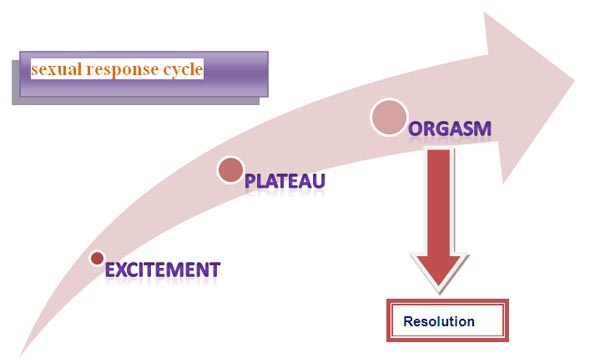
The sexual response cycle has four phases:
excitement, plateau,
orgasm, and
resolution. Both men and women experience
these phases, although the timing usually is
different. For example, it is unlikely that
both partners will reach orgasm at the same
time. In addition, the intensity of the
response and the time spent in each phase
varies from person to person. Understanding
these differences may help partners better
understand one another's bodies and
responses, and enhance the sexual experience.
We discuss both male and female sexual
response cycle since that is important in
solving the sexual problems. Four phases of
sexual response cycle include excitement,
plateau,
orgasm, and
resolution.
Phase 1: Excitement
General
characteristics of the excitement phase,
which can last from a few minutes to several
hours, include the following:
·
Muscle tension increases.
·
Heart rate quickens
and
breathing
is accelerated.
·
Skin may become flushed (blotches of redness appear on the chest
and back).
·
Nipples become hardened or erect.
·
Blood flow to the genitals increases, resulting in swelling of
the woman's clitoris
and
labia minora
(inner lips), and erection of the
man's
penis.
·
Vaginal lubrication begins.
·
The outer labia lay flat, revealing the
inner labia which swell and darken in color.
·
The woman's breasts become fuller and the vaginal walls begin to
swell.
·
The man's testicles
swell, his
scrotum
tightens, and he begins secreting a
lubricating liquid.
Phase 2: Plateau
General
characteristics of the plateau phase, which
extends to the brink of orgasm, include the
following:
·
The changes begun in phase 1 are intensified.
·
The vagina
continues to swell from increased
blood flow, and the vaginal walls turn a
dark purple.
·
The inner lips thicken more, as much as two
or three times normal, and may part, making
the entrance to the vagina visible. The
inner and outer labia darken, becoming quite
dark just before orgasm.
Women who have been pregnant have a better
blood supply to the genitals, and their
labia will darken more than before they had
children.
·
The vagina expands and elongates, ballooning
out in the deepest two-thirds.
The outer one-third of the vaginal wall
thickens (due to increased blood flow) and
contracts, making the entrance tighter.
·
The uterus elevates to its highest point
·
The woman's clitoris becomes highly sensitive (may even be
painful to touch) and retracts under the
clitoralhood to avoid direct
stimulation from the penis.
·
The man's testicles are withdrawn up into the scrotum.
·
Breathing, heart rate, and
blood pressure
continue to increase.
·
Muscle spasms may
begin in the feet, face, and hands.
·
Muscle tension increases.
Phase 3: Orgasm
The orgasm is
the climax of the sexual response cycle. It
is the shortest of the phases and generally
lasts only a few seconds. General
characteristics of this phase include the
following:
·
Involuntary muscle contractions begin.
·
Blood pressure, heart rate, and breathing are at their highest
rates, with a rapid intake of oxygen.
·
Muscles in the feet
spasm.
·
There is a sudden, forceful release of sexual tension.
·
In women, the muscles of the vagina contract. The
uterus
also undergoes rhythmic contractions.
·
In men, rhythmic contractions of the muscles at the base of the
penis result in the
ejaculation
of
semen.
·
A rash, or "sex flush"
may appear over the entire body.
Phase 4: Resolution
During
resolution, the body slowly returns to its
normal level of functioning, and swelled and
erect body parts return to their previous
size and color. This phase is marked by a
general sense of well-being, enhanced
intimacy and, often,
fatigue. Some women are capable of a
rapid return to the orgasm phase with
further sexual stimulation and may
experience multiple orgasms. Men need
recovery time after orgasm, called a
refractory period, during which they cannot
reach orgasm again. The duration of the
refractory period varies among men and
usually lengthens with advancing age.
FEMALE SEXUAL AROUSAL -
EVERYONE EXPERIENCES SEXUAL AROUSAL
DIFFERENTLY.
The beginnings of sexual arousal in a
woman's body is usually marked by
vaginal lubrication
(wetness), swelling and engorgement of the
external genitals,
and internal enlargement of the
vagina.
There have been studies to find the
degree of correlation between these
physiological responses and the woman's
subjective sensation of being sexually
aroused: the findings usually are that in
some cases there is a high correlation,
while in others, it is surprisingly low.
Further stimulation can lead to further
vaginal wetness and further engorgement and
swelling of the
clitoris
and the
labia,
along with increased redness or darkening of
the skin in these areas. Further changes to
the internal organs also occur including to
the internal shape of the vagina and to the
position of the
uterus
within the
pelvis.
Other changes include an increase in
heart rate
as
well as in
blood pressure,
feeling hot and flushed and perhaps
experiencing tremors.
A
sex flush
may extend over
the chest and upper body.
If sexual stimulation continues, then sexual
arousal may peak into
orgasm. After
orgasm, some women do not want any further
stimulation and the sexual arousal quickly
dissipates. Suggestions have been published
for continuing the sexual excitement and
moving from one orgasm into further
stimulation and maintaining or regaining a
state of sexual arousal that can lead to
second and subsequent orgasms.Some women
have experienced such multiple orgasms quite
spontaneously.
While young women may become sexually
aroused quite easily, and reach orgasm
relatively quickly with the right
stimulation in the right circumstances,
there are physiological and psychological
changes to women's sexual arousal and
responses as they age. Older women produce
less vaginal lubrication and studies have
investigated changes to degrees of
satisfaction, frequency of sexual activity,
to desire, sexual thoughts and
fantasies,
sexual arousal, beliefs about and attitudes
to sex, pain, and the ability to reach
orgasm in women in their 40s and after
menopause.
Other factors have also been studied
including socio-demographic variables,
health, psychological variables, partner
variables such as their partner's health or
sexual problems, and lifestyle variables. It
appears that these other factors often have
a greater impact on women's sexual
functioning than their menopausal status.
It is therefore seen as important always to
understand the "context of women's lives"
when studying their sexuality.
Reduced
estrogen
levels may be associated with increased
vaginal dryness and less
clitoral erection
when aroused, but are not directly related
to other aspects of sexual interest or
arousal. In older women, decreased pelvic
muscle tone may mean that it takes longer
for arousal to lead to orgasm, may diminish
the intensity of orgasms, and then cause
more rapid resolution. The uterus typically
contracts during orgasm and, with advancing
age, those contractions may actually become
painful.
Asexual problem, or sexual dysfunction,
refers to a problem during any phase of the
sexual response cycle
that prevents the individual or
couple from experiencing satisfaction from
the sexual activity. The sexual response
cycle has four phases: excitement, plateau,
orgasm, and resolution.
While research
suggests that sexual dysfunction is common
(43% of women and 31% of men report some
degree of difficulty), it is a topic that
many people are hesitant to discuss.
Fortunately, most cases of sexual
dysfunction are treatable, so it is
important to share your concerns with your
partner and doctor.
Enhance your love life-sex power
Here are some tips to enhance your love
life.
 Have a good night sleep for at least 7
hours a day
Have a good night sleep for at least 7
hours a day
Drink lot of water at least 3 to 4 liters a
day
Avoid smoking, alcohol, coffee and tea
Make regular time for togetherness with your
partner. It’s easy to put togetherness with
your partner to behind as we look after
kids, try to work, socialize with friends.
If sex is your last schedule, then you will
become tiered when you even think about it.
It’s important you spend much quality time
with your partner outside bedroom then that
itself can enhance your sex life inside the
bed room.
Don’t let sex become routine-
Ø
Don’t always have one partner be aggressor
and other passive. Swap the roles.
Ø
Initiate sexual opportunity with
surprises .Call home from your office saying
“I am romantic today and I would like to
make love” or a verbal invitation at
unexpected time
Ø
Introduce new options into your sexual life.
This must be accepted by the partners too.
For example: this may be sensual massage
before actual sex.
Ø
Try different sex positions.
Ø
Occasionally omit sexual intercourse from
lovemaking sessions; you may even attain
other pleasures that are equally arousing.
Don’t think love life is only sex life.
Spending your time with partner is itself is
good part of relationship.
Keep some romance in your life. Some of the
gestures are not ceremonial they make your
spouse feel special and love. For example:
go out with your partner to exotic location,
a candle light dinner, second, third or even
fourth honeymoon, give some special gift.
For variety of reason –aesthetic and
otherwise not everyone shares the same
sexual taste. If your partner won’t
participate in some form of sex that you
find quiet appealing, the most important
thing to remember is that she or he is not
rejecting you but only your activity. Don’t
accuse your partner for this. Find some
compromise solution.
If
you are looking for every sexual encounter
to be prodigious, earth shattering event
then you ends up in failure. No too sexual
encounters are same. One day you reach
orgasm quickly and other day it is delayed.
Even the most loving spouse neglect
expression of affection. Most often
affection is expressed in action more
meaningful than words, never hearing a word
of affection can be troubling and can
lead people to question whether
their partner really care them. When
affection is expressed only during sex, and
not at any other time, it can lead a person
to think like this “I love having sexual
intercourse with you” rather than “I love
you.”
Intimacy can be defined as a process in
which two caring persons share as freely as
possible in the exchange of feelings,
thoughts and action. Intimacy is marked by
mutual sense of acceptance, commitment,
tenderness, and trust. Communication in an
intimate relationship differs in certain
ways from communication with other people in
life. This is because partners are truly
committed, intimate relationship is based on
assumption that neither one of them
deliberately intents to hurt other. This
assumption can’t be made in dealing with
rest of the world. Difficulty initiating or
maintaining intimate relationship affect sex
life.
Female Sexual Problems and their
Homoeo-pathic management
The causes of
sexual problems are as varied and complex as
the human race. Some problems stem from a
simple, reversible physical problem. Others
can stem from more serious medical
conditions, difficult life situations, or
emotional problems. Still others have a
combination of causes. Any of the following
can contribute to sexual problems:
1. Relationship problems: Discord in other aspects of the relationship between spouses,
such as childrearing, or money, can cause
sexual problems. Issues of control or even
abuse in the relationship are especially
harmful to sexual harmony. Such problems can
prevent a woman from communicating her
sexual wants and needs to her partner.
HOMOEOPATHIC BOOK CALLED SYNTHESIS REPERTORY
mentions about relationship problem in the
mind chapter. Loving couples can understand
each other and there is no disharmony. When
the spouses can’t understand each other or
there is disharmony between then because
there is no love between them basically.
Synthesis repertory gives following
symptoms.
Note: what is given in quotation is directly
taken from Homoeopathic book synthesis
“MIND - AILMENTS FROM - love; disappointed”
which has 53 remedies
“MIND - AVERSION - persons - certain, to”
which has 30 remedies
When you don’t like your spouse then naturally there is aversion to
sex. If you don’t like your spouse for long
time you may feel rejected in relationship
or feel isolated then synthesis gives
following symptoms
Note: what is given in quotation is directly
taken from Homoeopathic book synthesis
“MIND - AILMENTS FROM - rejected; from
being” which has 13 remedies
“MIND - FEAR - rejection; of” which has 12
remedies
“MIND - FORSAKEN feeling - isolation;
sensation of” which has 157 remedies
When she is engaged (even past relationship)
with sexual relationship with another person
other than her own spouse then there is
underlying guilt which causes sexual
dysfunction. The underlying guilt is treated
then sexual dysfunction is removed. Then
synthesis gives following symptoms
Note: what is given in quotation is directly
taken from Homoeopathic book synthesis
“MIND - ANXIETY - conscience; anxiety of”
which has 114 remedies
If there is constant fight between spouses
for silly reasons there may be sexual
dysfunctions.
Then
synthesis
gives following symptoms
Note: what is given in quotation is directly
taken from Homoeopathic book synthesis
“MIND – QUARRELSOME” which has 196
remedies.
“MIND - CONTRADICTION - disposition to
contradict” has 77 remedies
Basic reason why spouses quarrel is because
one is critical or censorious of other
spouse then following symptoms in synthesis
are
MIND – CENSORIOUS” which has 140 remedies.
2. Emotional problems: Depression, anxiety
(about sex or other things), stress,
resentment, and guilt can all affect a
woman's sexual function.
In
Depression. You might not enjoy sex if
you're depressed.
Homeopathic book called synthesis mentions
about depression in chapter
mind. We will discuss what is mentioned in
the book and its number of remedies.
Depression is mentioned as sadness in the
textbook
Note: what is given in quotation is directly
taken from Homoeopathic book synthesis
“MIND – SADNESS” has about 634remedies
“MIND – GRIEF”
has about 125 remedies
In Stress. Concerns about work, school,
health or family can keep your mind active
at night, making it difficult for a good
sex. Stressful life events — such as the
death or illness of a loved one, divorce, or
a job loss — may lead to lack of good sex.
Stress is usually an emotional disorder.
Homeopathic book called synthesis mentions
about stress in chapter mind. We will
discuss what is mentioned in the book and
its number of remedies. Stress is not given
directly. Since stress is emotional disorder
numbers of symptoms are mention in
synthesis.
Note: what is given in quotation is directly
taken from Homoeopathic book synthesis
“MIND - AILMENTS FROM – excitement –
emotional” has about 99 remedies
“MIND - AILMENTS FROM - death of loved ones”
has 26 remedies
“MIND - AILMENTS FROM - love; disappointed”
has 53 remedies
“MIND - AILMENTS FROM - business failure”
has 17 remedies
“MIND - AILMENTS FROM - money; from losing”
has 14 remedies
In Anxiety. Everyday anxieties as well as
more-serious anxiety disorders, such as
post-traumatic stress disorder, may disrupt
your sexual function.
Homeopathic book called synthesis mentions
about post- traumatic stress disorder in
chapter mind. We will discuss some of the
following symptoms of post- traumatic stress
disorder mentioned in the book and its
number of remedies
Note: what is given in quotation is directly
taken from Homoeopathic book synthesis
“MIND – ANXIETY” has about 492remedies
“MIND - THOUGHTS - tormenting - past
disagreeable events, about” has four
remedies
. “MIND
- THOUGHTS - persistent - unpleasant
subjects, haunted by” has twelve
remedies
3. Insufficient stimulation: A woman's (or her partner's) lack of knowledge about sexual
stimulation and response may prevent a woman
from achieving a satisfactory experience.
Poor communication between partners can also
be a culprit here.
·
Homeopathic book called synthesis mentions
about insufficient stimulation result
in lack of orgasm in chapter
FEMALE GENITALIA
“FEMALE GENITALIA/SEX - ORGASM – delayed”
has 4 remedies
4. Gynecologic problems: A number of pelvic disorders can cause pain in intercourse and
thus decrease satisfaction.
o
Vaginal dryness: The most common reason for
this in younger women is insufficient
stimulation. In older women, the decrease in
estrogen that occurs in perimenopause or
menopause is the cause of vaginal dryness.
Poor lubrication can also be linked to
hormone imbalances and other illnesses and
to certain medications. It can inhibit
arousal or make intercourse uncomfortable.
o
Vaginismus: This is a painful spasm of the
muscles surrounding the vaginal opening
that causes the vaginal opening to
"tighten." It can prevent penetration or
make penetration extremely painful.
Vaginismus can be caused by injuries or
scars from surgery, abuse, or childbirth, by
infection, or by irritation from douches,
spermicides, or condoms. It can also be
caused by fear.
o
Sexually transmitted diseases:
Gonorrhea,
herpes,
genital warts,
chlamydia,
and
syphilis
are infectious diseases spread by sexual
contact. They can cause changes in the
genitals that make sex uncomfortable or even
painful.
o
Vaginitis:
Inflammation and irritation of vaginal
tissues due to infection or other causes can
make intercourse uncomfortable or painful.
o
Endometriosis, pelvic
mass,
ovarian cyst,
surgical scars: Any of these can cause an
obstruction or anatomical changes that
prevent intercourse or make it difficult or
painful.
o
Pelvic inflammatory disease: This is an infection of the vagina that moves up into the cervix,
uterus, and ovaries. It can be very painful
on its own and make intercourse extremely
painful.
o
Nerve damage after surgery: Unavoidable
cutting of small nerves during pelvic
surgery (such as
hysterectomy) may decrease sensation
and response.
5. Physical conditions: Many physical or medical conditions can decrease a woman's
satisfaction with her sex life.
o
Tiredness (fatigue)
o
Chronic diseases such as diabetes,
heart disease, liver disease,
kidney disease
o
Cancer
o
Neurologic disorders
o
Vascular (blood flow) disorders
o
Hormonal imbalances
o
Menopause
o
Pregnancy
o
Alcohol or drug abuse
·
Medications: Certain medications can reduce desire or arousal. One
well-known group of drugs that have this
effect are the selective serotonin-reuptake
inhibitor (SSRI) group of
antidepressants, which includes drugs
such as Prozac and Zoloft. Others include
certain
chemotherapy
drugs, drugs for
high blood pressure, and
antipsychotic
medications.
·
Other medical treatments: Treatments such as radiation therapy for
certain types of cancer can reduce vaginal
lubrication. They can also make skin and the
membranes lining the genitals tender and
sensitive.
·
History of abuse: A woman who has suffered sexual or other abuse
may have trouble trusting her partner enough
to relax and become aroused. She may have
feelings of fear, guilt, or resentment that
get in the way of a satisfactory experience,
even if she cares deeply about her current
partner.
The underlying guilt is treated then sexual
dysfunction is removed. The homeopathic book
called
synthesis gives following symptoms
Note: what is given in quotation is directly
taken from Homoeopathic book synthesis
“MIND - ANXIETY - conscience; anxiety of”
which has 114 remedies
If you don’t like your spouse for long time you may feel rejected
in relationship or feel isolated then
synthesis gives following symptoms
Note: what is given in quotation is directly
taken from Homoeopathic book synthesis
“MIND - AILMENTS FROM - rejected; from
being” which has 13 remedies
“MIND - FEAR - rejection; of” which has 12
remedies
“MIND - FORSAKEN feeling - isolation;
sensation of” which has 157 remedies
6. Attitudes toward sex: Many people, either because of the way they were brought up or
because of earlier bad experiences, don't
view sex as a normal and enjoyable part of a
couple's relationship. They may associate
sex or sexual feelings with shame, guilt,
fear, or anger. On the other hand are people
who have unrealistic expectations about sex.
Portrayals of sex in television and movies
as always easy and fantastic mislead some
people into believing that is how it is in
real life. These people are disappointed or
even distressed when sex is sometimes not
earth-shattering or when a problem occurs.
Regarding the attitude towards sex the chapter female genitalia in
synthesis books gives number of symptoms
regarding diminished sexual desire due to
attitude. Some are following symptoms
“FEMALE GENITALIA/SEX - COITION - aversion
to” has 78 remedies
“FEMALE GENITALIA/SEX - SEXUAL DESIRE –
diminished” has 144 remedies.
7. Sexual problems of the partner: If a woman's partner has sexual problems, such as impotence or
lack of desire, this can inhibit her own
satisfaction.
Who Is Affected by Sexual Problems?
Both men and
women are affected by sexual problems.
Sexual problems occur in adults of all ages.
Among those commonly affected are those in
seniors, which may be related to a decline
in health associated with
aging.
IN OUR CLINIC WE REPERTORISE THE PATIENT’S
TOTALITY OF
SYMPTOMS
CONSIDERING ALL ASPECT INCLUDING HER LIFE
STYLE, FOOD HABITS, AND PSYCHOLOGICAL
FACTORS WHICH ALL CONTRIBUTE TO SEXUAL
DYSFUNCTION.
Watch your pregnancy
Your body has a
great deal to do during pregnancy. Sometimes
the changes taking place will cause
irritation or discomfort, and on occasions
they may seem quite alarming. There is
rarely any need for alarm but you should
mention anything that is worrying you to
your maternity team. This page offers
information on some of the more common
problems during pregnancy and their
homoeopathic management– click on the links
below.
|
TWENTY FIVE COMMON PROBLEMS OF
PREGNANCY AND THEIR HOMOEOPATHIC
MANAGEMENT
|
|
|
|
|
|
|
|
|
|
|
|
|
|
|
|
|
|
|
|
|
|
|
|
|
|
|
|
|
|
1.
Backache
2.
Vaginal Bleeding
3.
Vaginal discharge
4.
Vomiting and morning
sickness in pregnancy
5.
Constipation
6.
Piles (haemorrhoids)
7.
High blood pressure and pre-eclampsia
8.
Deep vein thrombosis (DVT)
9.
Cramp
10.
Faintness
11.
Feeling Hot in pregnancy
12.
Incontinence
13.
Urinating a
lot
14.
Skin and hair
15.
Itching
16.
Stretch marks
17.
Swollen
ankles, feet, fingers
18.
Varicose veins
19.
Indigestion
and heartburn
20.
Leaking nipples
21.
Sleeplessness
22.
Pelvic pain
23.
Headaches
24.
Nosebleeds
25.
Teeth and gums
1. Pregnancy related Back ache
During pregnancy, the ligaments in your body
naturally become softer and stretch to
prepare you for labour. This can put a
strain on the joints of your lower back and
pelvis, which can cause backache.
Eighty percent of women will experience back
pain at some point during their pregnancies.
The severity of this pain during pregnancy
ranges from mild discomfort after standing
for long periods of time to debilitating
pain that interferes with daily life.
Although
back pain during pregnancy
can
be a sign of a more serious condition,
including labor, in most cases, it is the
result of changes happening within the body.
Factors that Influence Back Pain during
Pregnancy
The spine is vulnerable due to the following
factors during pregnancy:
-
Hormone production during pregnancy makes joints less
stable (to allow the pelvis to spread as
the baby grows)
-
Typical weight gain of 25-35 pounds during pregnancy,
with the majority or extra weight
distributed around the abdomen
-
Increase in postural strain as the body compensates
for changes in the pregnant woman's
center of gravity
Avoiding backache in pregnancy
There are
several things you can do to help prevent
backache from happening, and to help you
cope with an aching back if it does occur.
The tips listed here can help you to protect
your back – try to remember them every day:
·
avoid lifting heavy objects
·
bend your knees and keep your back straight when lifting or
picking up something from the floor
·
move your feet when turning round to avoid twisting your spine
·
wear flat shoes as these allow your weight to be evenly
distributed
·
work at a surface high enough to prevent you stooping
·
try to balance the weight between two bags when carrying shopping
·
sit with your back straight and well supported
·
make sure you get enough rest, particularly later in pregnancy
A firm mattress
can also help to prevent and relieve
backache. If your mattress is too soft, put
a piece of hardboard under it to make it
firmer. Massage can also help.
Homoeopathic management of Pregnancy related
Back ache
Pregnancy related Back ache
can be managed by variety of medicines
available.
SYNTHESIS REPERTORY A HOMOEOPATHIC BOOK
mentions about 312 medicines for back ache
and about seven medicines when it is related
to pregnancy.
IN OUR CLINIC WE REPERTORISE THE PATIENT’S
TOTALITY OF SYMPTOMS
CONSIDERING ALL ASPECT INCLUDING HER LIFE
STYLE, FOOD HABITS, PSYCHOLOGICAL FACTORS
WHICH ALL CONTRIBUTE TO BACKACHE.
2. Pregnancy related Vaginal Bleeding
Bleeding during
pregnancy is relatively common but it can be
a dangerous sign, and you should always
contact your midwife or GP immediately if it
happens to you. In early pregnancy you might
get some perfectly harmless light bleeding,
called 'spotting'. This is when the
developing embryo plants itself in the wall
of your womb. This often happens around the
time that your first period after conception
would have been due.
Causes
of bleeding in pregnancy in early pregnancy
During the first 12 weeks of pregnancy,
vaginal bleeding can be a sign of
miscarriage
or ectopic pregnancy. However, many
women who bleed at this stage of pregnancy
go on to have normal and successful
pregnancies.
Miscarriage
If a pregnancy
ends before the 24th week of pregnancy, it's
called a miscarriage. Miscarriages are quite
common in the first three months of
pregnancy and around one in five confirmed
pregnancies ends this way.
Many early
miscarriages (before 14 weeks) happen
because there is something wrong with the
baby. There can be other causes of
miscarriage, such as hormone or blood
clotting problems.
Most
miscarriages occur during the first 12 weeks
(three months) of pregnancy and, sadly, most
cannot be prevented. Find out more about
symptoms of miscarriage.
Ectopic pregnancy
Ectopic
pregnancies, when a fertilised egg implants
outside the womb for example in the
fallopian tube, can cause bleeding but are
less common than miscarriages.
It's a dangerous
condition because the fertilised egg can't
develop properly outside the womb. The egg
has to be removed – this can be through an
operation or with medicines. Find out more
about symptoms of ectopic pregnancy.
Causes of bleeding in late pregnancy
·
Cervical changes - can lead to bleeding, particularly after sex.
·
Vaginal infections
·
A 'show' - when the plug of mucus that has been in the cervix
during pregnancy comes away signalling that
the cervix is becoming ready for labour to
start. It may happen a few days before
contractions start or during labour itself.
Find out about
signs of labour and what happens.
·
Placental abruption - a serious condition in which the placenta
starts to come away from the womb wall.
Placental abruption usually causes stomach
pain, and this may occur even if there is no
bleeding.
·
Low-lying placenta (or placenta praevia) - when the placenta is
attached in the lower part of the womb, near
to or covering the cervix. Bleeding
from a low-lying placenta can be very heavy
and put you and your baby at risk. You may
be advised to to into hospital for emergency
treatment and usually a caesarean will be
recommended. Read more information on
placenta praevia.
·
Vasa praevia - a rare condition where the baby's blood vessels
run through the membranes covering the
cervix. Normally the blood vessels would be
protected within the umbilical cord and the
placenta. When your waters break, these
vessels may be torn and cause vaginal
bleeding. The baby can lose a
life-threatening amount of blood. It is very
difficult to diagnose vasa praevia, but it
may occasionally be identified before birth
by an ultrasound scan. Vasa praevia should
be suspected if there is bleeding and the
baby's heart rate changes suddenly after the
rupture of the membranes.
Finding out the cause of bleeding in
pregnancy
To work out what
is causing the bleeding, you may need to
have a vaginal or pelvic examination, an
ultrasound scan or blood tests to check your
hormone levels. Your doctor will also ask
you about other symptoms, such as cramp,
pain and dizziness. Sometimes the cause of
bleeding cannot be found.
If your symptoms
are not severe and your baby is not due for
a while, you will be monitored and, in some
cases, kept in hospital for observation. How
long you need to stay in hospital depends on
the cause of the bleeding and how many weeks
pregnant you are. Being in hospital enables
staff to keep an eye on you and your baby so
that they can act quickly if there are any
further problems.
Homoeopathic management of Pregnancy related
vaginal bleeding
Pregnancy related vaginal bleeding
can be managed by variety of medicines
available.
SYNTHESIS REPERTORY A HOMOEOPATHIC BOOK
mentions about 14 medicines for menses
during pregnancy and one medicine when it is
related to menses in first month.
Metrorrhagia
during pregnancy there are about32 remedies.
IN OUR CLINIC WE REPERTORISE THE PATIENT’S
TOTALITY OF SYMPTOMS
CONSIDERING ALL ASPECT INCLUDING HER LIFE
STYLE, FOOD HABITS, PSYCHOLOGICAL FACTORS
WHICH ALL CONTRIBUTE TO VAGINAL BLEEDING.
3. Vaginal discharge or
leucorrhea in pregnancy
All women,
whether they’re pregnant or not, have some
vaginal discharge starting a year or two
before puberty and ending after the
menopause. How much discharge you have
changes from time to time and it usually
gets heavier just before your period.
Is it
normal to have vaginal discharge in
pregnancy?
Yes. Almost all
women have more vaginal discharge in
pregnancy. This is quite normal and happens
for a few reasons. During pregnancy the
cervix (neck of the womb) and vaginal walls
get softer and discharge increases to help
prevent any infections travelling up from
the vagina to the womb.
Towards the end
of pregnancy, the amount of discharge
increases and can be confused with urine.
In the last week
or so of pregnancy, your discharge may
contain streaks of thick mucus and some
blood. This is called a 'show' and happens
when the mucus that has been present in your
cervix during pregnancy comes away. It's a
sign that the body is starting to prepare
for birth, and you may have a few small
'shows' in the days before you go into
labour.
Increased
discharge is a normal part of pregnancy, but
it's important to keep an eye on it and tell
your doctor or midwife if it changes in any
way.
When to
see your midwife or GP
Tell your
midwife or doctor if:
·
the discharge is coloured
·
it smells strange
·
you feel itchy or sore
Healthy vaginal
discharge should be clear and white and
should not smell unpleasant. If the
discharge is coloured or smells strange, or
if you feel itchy or sore, you may have a
vaginal infection.
The most common
infection is
thrush, which your doctor can treat
easily.
You should not use some
thrush medicines
in pregnancy.
Always talk to
your doctor, pharmacist or midwife if you
think you have thrush. You can help prevent
thrush by wearing loose cotton underwear,
and some women find it helps to avoid
perfumed soap or perfumed bath products.
Find out more
about
vaginal discharge, preventing thrush
and
treating thrush.
You should also
tell your midwife or doctor if your vaginal
discharge increases a lot in later
pregnancy.
If you have any
vaginal bleeding in pregnancy, you
should contact your midwife or doctor. Lots
of women lose a small amount of blood during
pregnancy, and this is usually nothing to
worry about. However, it can sometimes be a
sign of a more serious problem such as a
miscarriage or a problem with the
placenta.
Homoeopathic management of Pregnancy related
vaginal discharge
Pregnancy related vaginal discharge
can be managed by variety of medicines
available.
SYNTHESIS REPERTORY A HOMOEOPATHIC BOOK
mentions about 13medicines for vaginal
discharge or leucorrhea during pregnancy and
one medicine when vaginal discharge is
related to abortion.
IN OUR CLINIC WE REPERTORISE THE PATIENT’S
TOTALITY OF SYMPTOMS
CONSIDERING ALL ASPECT INCLUDING HER LIFE
STYLE, FOOD HABITS, PSYCHOLOGICAL FACTORS
WHICH ALL CONTRIBUTE TO VAGINAL DISCHARGE.
4. Vomiting and sickness in pregnancy
Nausea and vomiting in pregnancy, also known as morning sickness,
is very common in early pregnancy. It's
unpleasant but it doesn’t put your baby at
any increased risk, and usually clears up
between weeks 12 and 14 of pregnancy.
Some women get a very severe form of nausea
and vomiting, called hyperemesis gravidarum
(HG), which can be very serious. It needs
specialist treatment, sometimes in hospital.
Find out more about
hyperemesis gravidarum.
With morning sickness, some women are sick
(vomit) and some have a feeling of sickness
(nausea) without being sick. The term
‘morning sickness’ is misleading. It can
affect you at any time of the day or night,
and some women feel sick all day long.
It’s thought that hormonal changes in the
first
12 weeks
are probably one of the causes of morning
sickness or a lack of vitamin B6 in the
diet.
For most women, the symptoms of nausea and
vomiting usually begin before they’re nine
weeks pregnant, around six weeks after their
last period. Symptoms should ease as your
pregnancy progresses. In 9 out of 10 women,
symptoms disappear by the third month of
pregnancy. However, some women experience
nausea and vomiting for longer than this,
and about one woman in 10 continues to feel
sick after week 20.
How common is morning sickness?
During early pregnancy, nausea, vomiting and
tiredness are common symptoms. Around half
of all pregnant women experience nausea and
vomiting, and around three in 10 women
experience nausea without vomiting.
People sometimes consider morning sickness a
minor inconvenience of pregnancy, but for
some women it can have a significant adverse
effect on their day-to-day activities and
quality of life.
Treatments for morning sickness
If you have morning sickness, your GP or
midwife will initially recommend that you
try a number of changes to your diet and
daily life to help reduce your symptoms.
These include:
·
getting plenty of rest because tiredness can make nausea worse
·
if you feel sick first thing in the morning, give yourself time
to get up slowly – if possible, eat
something like dry toast or a plain biscuit
before you get up
·
drinking plenty of fluids, such as water, and sipping them little
and often rather than in large amounts,
because this may help prevent vomiting
·
eating small, frequent meals that are high in carbohydrate (such
as bread, rice and pasta) and low in fat –
most women can manage savoury foods, such as
toast, crackers and crispbread, better than
sweet or spicy foods
·
eating small amounts of food often rather than several large
meals, but don’t stop eating
·
eating cold meals rather than hot ones because they don’t give
off the smell that hot meals often do, which
may make you feel sick
·
avoiding foods or smells that make you feel sick
·
avoiding drinks that are cold, tart (sharp) or sweet
·
asking the people close to you for extra support and help – it
helps if someone else can cook but if this
isn’t possible, go for bland, non-greasy
foods, such as baked potatoes or pasta,
which are simple to prepare
·
distracting yourself as much as you can – often the nausea gets
worse the more you think about it
·
wearing comfortable clothes without tight waistbands
If you have severe morning sickness, your
doctor or midwife might recommend
medication.
Homoeopathic management of Pregnancy related
vomiting and morning sickness
Pregnancy related vomiting and morning
sickness
can be managed by variety of medicines
available.
SYNTHESIS REPERTORY A HOMOEOPATHIC BOOK
mentions about 96medicines for nausea during
pregnancy and 107 medicines for vomiting
related to pregnancy.
IN OUR CLINIC WE REPERTORISE THE PATIENT’S
TOTALITY OF SYMPTOMS
CONSIDERING ALL ASPECT INCLUDING HER LIFE
STYLE, FOOD HABITS, AND PSYCHOLOGICAL
FACTORS WHICH ALL CONTRIBUTE MORNING
SICKNESS.
Home management
Ginger
eases morning sickness
There is some
evidence that ginger supplements may help
reduce nausea and vomiting. To date, there
have not been any reports of adverse effects
being caused by taking ginger during
pregnancy. However, ginger products are
unlicensed in the UK, so buy them from a
reputable source, such as a pharmacy or
supermarket. Check with your pharmacist
before you use ginger supplements. You can
find out more about
vitamins and
supplements in pregnancy.
Some women find
that ginger biscuits or ginger ale can help
reduce nausea. You can try different things
to see what works for you.
Acupressure might help morning sickness
Acupressure on
the wrist may also be effective in reducing
symptoms of nausea in pregnancy. Acupressure
involves wearing a special band or bracelet
on your forearm. Some researchers have
suggested that putting pressure on certain
parts of the body may cause the brain to
release certain chemicals that help reduce
nausea and vomiting.
There have been
no reports of any serious adverse effects
caused by using acupressure during
pregnancy, although some women have
experienced numbness, pain and swelling in
their hands.
When to
see a doctor for morning sickness
If you are
vomiting and can’t keep any food or drink
down, there is a chance that you could
become dehydrated or malnourished. Contact
your GP or midwife immediately if you:
·
have very dark-coloured urine or do not pass urine for more than
eight hours
·
are unable to keep food or fluids down for 24 hours
·
feel severely weak, dizzy or faint when standing up
·
have abdominal (tummy) pain
·
have a high temperature (fever) of 38°C (100.4°F) or above
·
vomit blood
Urinary tract infections (UTIs)
can also cause nausea and vomiting. A UTI is
an infection that usually affects the
bladder but can spread to the kidneys.
If you have any
pain when passing urine or you pass any
blood, you may have a urine infection and
this will need treatment. Drink plenty of
water to dilute your urine and reduce pain.
You should contact your GP within 24 hours.
Risk
factors for morning sickness
A number of
different factors may mean you are more
likely to have NVP. These include:
·
nausea and vomiting in a previous pregnancy
·
a family history of NVP or morning sickness
·
a history of motion sickness, for example in a car
·
a history of nausea while using contraceptives that contain
oestrogen
·
obesity – where you have a body mass index (BMI) of 30 or more
·
stress
·
multiple pregnancies, such as twins or triplets
·
first pregnancy
5. Constipation in pregnancy
You may become
constipated very early in pregnancy because
of the hormonal changes in your body.
Avoiding constipation
There are a few
things you can do to help prevent
constipation. These include:
·
eat foods that are high in fibre, such as wholemeal breads,
wholegrain cereals, fruit and vegetables,
and pulses such as beans and lentils (find
out more about
healthy eating in pregnancy) ref
website:
http://worldofhomoeopathictreatment.com/ppt/CONSTIPATION-PREVENTION.html
·
exercise regularly to keep your muscles toned (find out more
about
exercise in pregnancy)
·
drink plenty of water
·
avoid iron supplements as they can make you constipated – ask
your doctor if you can manage without them
or change to a different type
Homoeopathic management of Pregnancy related
constipation
Pregnancy related constipation
can be managed by variety of medicines
available.
SYNTHESIS REPERTORY A HOMOEOPATHIC BOOK
mentions about 425medicines for constipation
and 28 medicines for constipation related to
pregnancy.
IN OUR CLINIC WE REPERTORISE THE PATIENT’S
TOTALITY OF SYMPTOMS
CONSIDERING ALL ASPECT INCLUDING HER LIFE
STYLE, FOOD HABITS, AND PSYCHOLOGICAL
FACTORS WHICH ALL CONTRIBUTE MORNING
SICKNESS
6. Coping with haemorrhoids when pregnant
Piles, also
known as haemorrhoids, are enlarged and
swollen veins in or around the lower rectum
and anus. Anyone can get piles – they don't
just happen in pregnancy. When you're
pregnant, piles can occur because hormones
make your veins relax.
Piles may itch,
ache or feel sore. You can usually feel the
lumpiness of piles around your anus. They
may also bleed a little and can make going
to the toilet uncomfortable or painful. You
may also notice pain when passing a stool
(faeces, poo) and a discharge of mucus
afterwards. Sometimes you may feel as though
your bowels are still full and need
emptying.
Piles usually go
within weeks after the birth.
Haemorrhoids
are classified into two general categories:
internal and external.
Internal haemorrhoids
lie far enough inside the rectum that you
can't see or feel them. They don't usually
hurt because there are few
pain-sensing
nerves in the rectum. Bleeding may be the
only sign that they are there. Sometimes
internal haemorrhoids
prolapse, or enlarge and protrude outside the anal sphincter. If so, you may be
able to see or feel them as moist, pink pads
of
skin
that
are pinker than the surrounding area.
Prolapsed haemorrhoids may hurt because they
become irritated by rubbing from clothing
and sitting. They usually recede into the
rectum on their own; if they don't, they can
be gently pushed back into place.
External
haemorrhoids
lie
within the anus and are often uncomfortable.
If an external haemorrhoid prolapses to the
outside (usually in the course of passing a
stool), you can see and feel it. Blood clots
sometimes form within prolapsed external
haemorrhoids, causing an extremely painful
condition called a thrombosis. If an
external haemorrhoid becomes thrombosed, it
can look rather frightening, turning purple
or blue, and could possibly bleed. Despite
their appearance, thrombosed haemorrhoids
are usually not serious and will resolve
themselves in about a week. If the
pain
is unbearable, the thrombosed
haemorrhoid can be removed with suitable
homeopathic drugs, which stops the pain.
Anal bleeding and
pain of any sort is alarming and should be
evaluated; it can indicate a
life-threatening condition, such as
colorectal cancer. Haemorrhoids are
the main cause of anal bleeding and are
rarely dangerous, but a definite diagnosis
from your doctor is essential.
How to ease piles
Constipation can
cause piles and if this is the case try to
keep your stools soft and regular.
You can help
ease piles, and prevent them, by making some
changes to your diet and lifestyle:
·
eat plenty of food that is high in fibre, like wholemeal bread,
fruit and vegetables, and drink plenty of
water – this will prevent
constipation, which can make piles
worse (find out more about
healthy eating in pregnancy)
·
avoid standing for long periods
·
take regular exercise
to improve your circulation
·
you may find it helpful to use a cloth wrung out in iced water to
ease the pain – hold it gently against the
piles
·
if the piles stick out, push them gently back inside or
suitable homeopathic medicines
·
avoid straining to pass a stool as this may make your piles worse
·
after passing a stool, clean your anus with moist toilet paper
instead of dry toilet paper
·
pat, rather than rub, the area
There are
homoeopathic medicines that can help soothe
inflammation around your anus. These treat
piles.
Homoeopathic management of Pregnancy related
haemorrhoids or piles
Pregnancy related haemorrhoids
can be managed by variety of medicines
available.
SYNTHESIS REPERTORY A HOMOEOPATHIC BOOK
mentions about 278medicines for haemorrhoids
or piles and 17 medicines for piles related
to pregnancy. Around 174 symptoms and its
medicines are given in the book.
IN OUR CLINIC WE REPERTORISE THE PATIENT’S
TOTALITY OF SYMPTOMS
CONSIDERING ALL ASPECT INCLUDING HER LIFE
STYLE, FOOD HABITS, PSYCHOLOGICAL FACTORS
WHICH ALL CONTRIBUTE PILES.
7. Pregnancy-induced hypertension and pre-eclampsia
Gestational hypertension, also referred to
sometimes as pregnancy induced hypertension
(PIH) is a condition of
high blood pressure during pregnancy.
Gestational hypertension can lead to a
serious condition called
preeclampsia
(also sometimes referred to as toxemia).
Hypertension during pregnancy affects about
6-8% of all pregnant women.
Preeclampsia is a condition that occurs only
during pregnancy.
Diagnosis is made by the combination of
high blood pressure
and protein in the urine, occurring after
week 20 of pregnancy.
Preeclampsia may also be called toxemia
and is often precluded by
gestational hypertension.
Preeclampsia affects about 2-6% of healthy,
first time moms.
The Symptoms Of Preeclampsia?
Mild preeclampsia: high blood pressure, water retention, and protein in the
urine. If you have mild
preeclampsia and your baby has not reached
full development, your doctor will probably
recommend you do the following:
-
Rest, lying on your left side to take
the weight of the baby off your major
blood vessels.
-
Increase prenatal checkups.
-
Consume less salt
-
Drink at least 8 glasses of water a day
-
Change your diet to include more protein
Severe preeclampsia: headaches, blurred vision, inability to tolerate
bright light, fatigue, nausea/vomiting,
urinating small amounts, pain in the upper
right abdomen, shortness of breath, and
tendency to bruise easily. Contact your
doctor immediately if you experience blurred
vision, severe headaches,
abdominal pain, and/or urinating very
infrequently .
During pregnancy
your blood pressure and urine will be
checked at every
antenatal appointment. This is
because a rise in blood pressure or protein
in the urine can be the first sign of
pre-eclampsia. Although pre-eclampsia
usually presents as high blood pressure
(pregnancy-induced hypertension) and protein
in the urine (pre-eclamptic toxaemia), it
can present in other ways
Pre-eclampsia
can run in families and affects around 3-5%
of pregnancies. Problems usually start
towards the end of pregnancy, after around
week 28, but can occur earlier. It can also
happen after the birth. It is likely to be
more severe if it starts earlier in
pregnancy.
Although most
cases of pre-eclampsia are mild and cause no
trouble, the condition can get worse and be
serious for both mother and baby. It can
cause fits (seizures) in the mother, which
is called eclampsia. It can also affect the
baby’s growth. If you develop pre-eclampsia,
you will be offered regular ultrasound scans
to check your baby's growth and health.
Pre-eclampsia is
life-threatening for mother and baby if left
untreated. That is why
routine antenatal checks
are so important to look for
pregnancy-induced hypertension and protein
in your urine (proteinuria).
Many women with
high blood pressure can hope for a vaginal
delivery after 37 weeks. But if you have
severe pre-eclampsia it may be necessary to
deliver your baby early, possibly by
caesarean section.
Risk
factors for pre-eclampsia
If you are at
higher risk of pre-eclampsia, You are
considered higher risk if you have one or
more of the following risk factors:
·
this is your first pregnancy
·
you are aged 40 or over
·
your last pregnancy was more than 10 years ago
·
you are very overweight
·
you have a family history of pre-eclampsia
·
you are carrying more than one baby
Your risk of
pre-eclampsia is also higher if any of the
following apply to you:
·
you had high blood pressure before you became pregnant
·
you had high blood pressure in a previous pregnancy
·
you have chronic kidney disease, diabetes or a disease that
affects the immune system, such as lupus
Symptoms of pre-eclampsia
There are
usually no symptoms to warn you that you
have hypertension or pre-eclampsia, and
often the only way it can be detected is
during the routine blood pressure and urine
checks made by your midwife.
If you do have
pre-eclampsia, you will probably feel well.
If you get symptoms, these might include:
·
bad headaches
·
problems with vision, such as blurred vision or lights flashing
before your eyes
·
pain just below the ribs
·
vomiting
·
sudden swelling of the face, hands and feet
However, you can
have severe pre-eclampsia
without any symptoms at all.
If you get any of the symptoms listed above,
or have any reason to think you have
pre-eclampsia, contact your midwife, doctor
or the hospital immediately.
Treatment of pre-eclampsia
Women with
pre-eclampsia need admission to hospital and
often medicines to lower their high blood
pressure. Occasionally, pre-eclampsia is a
reason to deliver the baby early – you may
be offered
induction of labour
or caesarean section.
Monitoring pre-eclampsia
It is vital to
go to all your antenatal appointments, or to
reschedule them if you can't make it to
them, as severe pre-eclampsia can affect
both your health and your baby’s health. If
left untreated, it can put you at risk from
a
stroke, impaired kidney and liver
function, blood clotting problems, fluid on
the lungs and seizures. Your baby may also
be born prematurely or small or even
stillborn.
While the root
cause of pre-eclampsia is not known, studies
suggest that the risk is higher if you are
overweight
when you become pregnant, so it’s a
good idea to reach a healthy weight before
trying for a baby.
It is also more
common if you have
high blood pressure before becoming
pregnant, or have had pre-eclampsia in a
previous pregnancy. If this applies to you,
attending regular check-ups to have your
blood pressure and urine tested is even more
important.
Homoeopathic management of Pregnancy related
Hypertension
·
Pregnancy related
hypertension
can be managed by variety of medicines
available.
SYNTHESIS REPERTORY A HOMOEOPATHIC BOOK
mentions about
150
medicines for
hypertension and wide variety of problems
are given in female chapter of same book in
which
Pregnancy
during complaint which covers all problems
related to pregnancy in general has about115
medicines.
As regarding
pre-eclampsia
symptom wise management of homeopathic
management is possible
·
Excess protein in your urine (proteinuria) or additional signs of
kidney problems: this can be controlled by
considering totality of symptoms alone.
·
Severe headaches:
SYNTHESIS REPERTORY
mention 485medincines for headache and headache associated
with pregnancy has about 22 remedies
·
Changes in vision, including temporary loss of vision, blurred
vision or light sensitivity:
SYNTHESIS REPERTORY
mention 259medincines for dim vision and dim vision
associated with pregnancy has about 2
remedies
·
Upper abdominal pain, usually under your ribs on the right side:
SYNTHESIS REPERTORY
mention 259medincines for ABDOMEN PAIN and
ABDOMEN PAIN associated with pregnancy has
about 18 remedies .Even the type of abdomen
pain during pregnancy is mentioned further
.Cramping pain in abdomen during pregnancy
has 1 remedy, Dragging and bearing down pain
in abdomen during pregnancy has about 3
remedies, Sore pain in abdomen has 6
remedies.
·
Nausea or vomiting
·
Decreased urine output:
SYNTHESIS REPERTORY under the chapter
bladder mentions about 94 remedies for
retarded urine and further must wait for
long time and
BLADDER - URINATION - urging to urinate -
ineffectual - pregnancy agg.; during has 1
remedy is also mentioned .
·
Decreased levels of platelets in your blood (thrombocytopenia):
SYNTHESIS REPERTORY under the chapter
generals has about 5 remedies for
thrombocytopenia.
·
Impaired liver function:
SYNTHESIS REPERTORY under the chapter
abdomen mention about 208 remedies related
to liver region and its complaint and when
it comes to pregnancy related liver
compliant mentions about one remedy
·
Shortness of breath, caused by fluid in your lungs:
SYNTHESIS REPERTORY under the chapter
RESPIRATION mention about 208 remedies
for respiration difficult and 5 remedies are
associated with respiration difficulty in
pregnancy
IN OUR CLINIC WE REPERTORISE THE PATIENT’S
TOTALITY OF SYMPTOMS
CONSIDERING ALL ASPECT INCLUDING HER LIFE
STYLE, FOOD HABITS, PSYCHOLOGICAL FACTORS
WHICH HYPERTESION AND PRE-ECLAMPSIA.
8.
Deep vein thrombosis (DVT)
Deep
vein thrombosis (DVT) is a serious condition
where a blood clot develops, often in the
deep veins of the legs but occasionally in
the pelvis. It can be fatal if the clot
dislodges and travels to the lungs. Pregnant
women are more likely to develop thrombosis
than non-pregnant women of the same age. A
clot can form at any stage of pregnancy and
up to six weeks after the birth.
Other factors
that put you at risk of thrombosis include:
·
having had thrombosis (a clot) before
·
being over 35
·
having thrombophilia
(a condition that makes clots more
likely)
·
being obese (with a BMI of 30 or more)
·
carrying twins or more
·
having fertility treatment
·
having just had a caesarean section
·
sitting still for long periods of time, including long-distance
travel of more than four hours
·
being a smoker (get
support to stop smoking)
·
dehydration
What
are the symptoms of DVT?
The symptoms of
DVT
usually, but not always, occur in one
leg only. Seek advice from your midwife or
doctor immediately if you notice one or more
of the following symptoms in your leg:
·
swelling
·
pain
·
warm skin
·
tenderness
·
redness, particularly at the back of the leg below the knee
During pregnancy
it's common to experience swelling or
discomfort in your legs, so this doesn't
mean there's a serious problem. If you're
worried, talk to your midwife or GP.
A pulmonary
embolism (PE) is when a blood clot travels
to the lungs. It can be fatal. Symptoms of
PE include:
·
sudden difficulty breathing
·
chest pain or tightness
·
collapse
Once a DVT is
diagnosed and treatment is started, the risk
of developing a PE is very small.
Homoeopathic management of Pregnancy related
DVT
HOMEOPATHIC
MANAGEMNENT involves symptoms wise
treatment. They are following symptoms of
leg can be treated by Homoeopathy:
·
swelling
-
pain
-
warm skin
-
tenderness
-
redness, particularly at the
back of the leg below the knee
Pregnancy related DVT
can be managed by variety of medicines
available.
SYNTHESIS REPERTORY A HOMOEOPATHIC BOOK
mentions about 18 medicines for
thrombosis.
Further in chapter extremity it mentions
about 2 medicines for
thrombosis.
IN OUR CLINIC WE REPERTORISE THE PATIENT’S
TOTALITY OF SYMPTOMS
CONSIDERING ALL ASPECT INCLUDING HER LIFE
STYLE, FOOD HABITS, PSYCHOLOGICAL FACTORS
WHICH ALL CONTRIBUTE MORNING SICKNESS
9.
Cramp in pregnancy
Cramp is a
sudden, sharp pain, usually in your calf
muscles or feet. It is most common at night.
Nobody really knows what causes it, but
there are some ideas about causes of
cramp
and why it can happen in pregnancy.
Avoiding
cramp
Regular, gentle
exercise in pregnancy, particularly ankle
and leg movements, will improve your
circulation and may help to prevent cramp
occurring. Try these foot exercises:
·
bend and stretch your foot vigorously up and down 30 times
·
rotate your foot eight times one way and eight times the other
way
·
repeat with the other foot
How to ease
cramp
It usually helps
if you pull your toes hard up towards your
ankle or rub the muscle hard. You can find
out more about
treatment of cramp, but remember
always to consult your midwife, GP or
pharmacist before taking painkillers or any
drugs in pregnancy.
Homoeopathic management of Pregnancy related
cramps
Cramps can occur
anywhere in your body and 2837 symptoms
related to cramp alone are mentioned in
different chapters in synthesis repertory.
Around nine symptoms of cramps are related
to pregnancy are taken from synthesis. With
each of the symptoms number of medicines it
has is also mentioned. They are
Note: what is given in quotation is directly
taken from Homoeopathic book synthesis
“
STOMACH - PAIN - pregnancy - during - agg. –
cramping” has one medicine
“ABDOMEN
- PAIN - pregnancy agg.; during – cramping”
has 2 medicine
“FEMALE
GENITALIA/SEX - PAIN - Uterus - pregnancy
agg.; during” - has 3 medicine
“EXTREMITIES - CRAMPS – pregnancy” has 3
medicines
“EXTREMITIES
- CRAMPS - Feet - Soles - pregnancy agg.;
during” has one medicine
“EXTREMITIES
- CRAMPS - Legs - pregnancy agg.; during”
has 3 medicine
“EXTREMITIES
- CRAMPS - Legs - Calves - pregnancy agg.;
during” has 7medicine
“EXTREMITIES
- CRAMPS - Toes - pregnancy agg.; during”
has one medicine
“SLEEP
- SLEEPLESSNESS - pregnancy agg.; during -
cramps in calves, from” has 6 medicine
IN OUR CLINIC WE REPERTORISE THE PATIENT’S
TOTALITY OF SYMPTOMS
CONSIDERING ALL ASPECT INCLUDING HER LIFE
STYLE, FOOD HABITS, PSYCHOLOGICAL FACTORS
WHICH ALL CONTRIBUTE MORNING SICKNESS
NOTE: agg IS
AGGRAVATION=INCREASED
10. Faint in pregnancy
Pregnant women
often feel faint. This is because of the
hormonal changes occurring in your body.
Fainting happens if your brain is not
getting enough blood and therefore not
enough oxygen.
You are most
likely to feel faint if you stand too
quickly from a chair or out of a bath, but
it can also happen when you are lying on
your back. You can find out more about
causes of fainting.
Avoiding
feeling faint
Here are some
tips to help you cope:
·
try to get up slowly after sitting or lying down
·
if you feel faint when standing still, find a seat quickly and
the faintness should pass – if it doesn’t,
lie down on your side
·
if you feel faint while lying on your back, turn on your side
It’s better not
to lie flat on your back in later pregnancy
or during labour. Find out more about the
symptoms that might mean you're going to
faint, such as a sudden, clammy sweat,
ringing in your ears and fast, deep
breathing
Homoeopathic management of Pregnancy related
fainting
Pregnancy related FAINTING
can be managed by variety of medicines
available.
SYNTHESIS REPERTORY A HOMOEOPATHIC BOOK
mentions about 332 medicines for
FAINTNESS IN
CHAPTER GENERAL.
Further in same chapter it mentions about 8
medicines associated with pregnancy.
IN OUR CLINIC WE REPERTORISE THE PATIENT’S
TOTALITY OF SYMPTOMS
CONSIDERING ALL ASPECT INCLUDING HER LIFE
STYLE, FOOD HABITS, PSYCHOLOGICAL FACTORS
WHICH ALL CONTRIBUTE FAINTING.
11.Feeling
hot
in pregnancy
During pregnancy
you’re likely to feel warmer than normal.
This is due to hormonal changes and an
increase in blood supply to the skin. You’re
also likely to sweat more. It helps if you:
·
wear loose clothing made of natural fibres such as cotton, as
these are more absorbent and breathe more
than synthetic fibres
·
keep your room cool – you could use an electric fan to cool it
down
·
wash frequently to help you feel fresh
Homoeopathic management of Pregnancy related
feeling hot
Homeopathy gives important to thermal status
of a patient in every disease. If the
patient feels uncontrollable heat of body
during pregnancy it can be managed.
CHAPTER GENERAL IN SYNTHESIS MENTIONS ABOUT
216 REMEDIES FOR HEAT SENSATION.
REVERSE CONDITION OF EXESSIVE COLDNESS
DURING PREGNANCY IS POSSIBLE.SYNTHESIS
MENTIONS ABOUT LACK OF VITAL HEAT WITCH
MEANS COLDESS OF BODY HAS ABOUT 278
REMEDIES.
IN OUR CLINIC WE REPERTORISE THE PATIENT’S
TOTALITY OF SYMPTOMS
CONSIDERING ALL ASPECT INCLUDING HER LIFE
STYLE, FOOD HABITS, AND PSYCHOLOGICAL
FACTORS WHICH ALL CONTRIBUTE TO
THERMALSTATUS OF THE PATIENT.
12. Incontinence in pregnancy
Incontinence is
a common problem both during and after
pregnancy. Sometimes pregnant women are
unable to prevent a sudden spurt of urine or
a small leak when they cough, laugh or
sneeze, or when they move suddenly, or just
get up from a sitting position. This may be
temporary, because the pelvic floor muscles
(the muscles around the bladder) relax
slightly to prepare for the baby's delivery.
Homoeopathic management of Pregnancy related
Incontinence
Pregnancy related INCONTINENCE
can be managed by variety of medicines
available.
SYNTHESIS REPERTORY A HOMOEOPATHIC BOOK
mentions about 246medicines for urination
involuntary which is equals to
INCONTINECE.109 symptoms of involuntary
urination (incontinence) is found in same
book.
Following symptoms and number of medicines
with each of the symptoms of incontinence
are related to pregnancy are mentioned in
the same book.
Note: what is given in quotation is directly
taken from Homoeopathic book synthesis
“BLADDER - URINATION - involuntary - night -
pregnancy agg.; during” has 1 remedy
“BLADDER
- URINATION - involuntary - cough agg.;
during - pregnancy agg.; during” has 1
remedy
“BLADDER - URINATION - involuntary -
pregnancy agg.; during” has 11 remedies
IN
OUR CLINIC WE REPERTORISE THE PATIENT’S
TOTALITY OF SYMPTOMS
CONSIDERING ALL ASPECT INCLUDING HER LIFE
STYLE, FOOD HABITS, AND PSYCHOLOGICAL
FACTORS WHICH INFLUENCE THE DISEASE.
NOTE: agg IS
AGGRAVATION=INCREASED
13. Urinating a lot in pregnancy
Needing to
urinate (pass water, or pee) often may start
in early pregnancy. Sometimes it continues
throughout pregnancy. In later pregnancy it
is the result of the baby’s head pressing on
your bladder.
How to
reduce the need to pass urine
If you find that
you need to get up in the night to pass
urine, try cutting out drinks in the late
evening. But make sure you drink plenty of
non-alcoholic, caffeine-free drinks during
the day. Later in pregnancy, some women find
it helps to rock backwards and forwards
while they are on the toilet. This lessens
the pressure of the womb on the bladder so
that you can empty it properly.
When to get
help
If you have any
pain while passing water or you pass any
blood in your urine, you may have a urine
infection, which will need treatment. Drink
plenty of water to dilute your urine and
reduce pain. You should contact your GP
within 24 hours of first noticing these
symptoms. You can find out more about:
·
symptoms of urinary infections
·
treating urinary infections
Don't take any
medicines without asking your midwife,
doctor or pharmacist whether they are safe
in pregnancy.
Homoeopathic management of Pregnancy related
Urinating a lot
Pregnancy related frequent urination or
urinating a lot is mentioned in synthesis
repertory.
SYNTHESIS REPERTORY A HOMOEOPATHIC BOOK
mentions about 290 medicines for urination
frequent.
14. Skin and hair changes in pregnancy
Hormonal changes
taking place in pregnancy will make your
nipples and the area around them go darker.
Your skin colour may also darken a little,
either in patches or all over.
Birthmarks,
moles and freckles may also darken. Some
women develop a dark line down the middle of
their stomach. These changes will gradually
fade after the baby is born, although your
nipples may remain a little darker.
If you sunbathe
while you are pregnant, you may find you
burn more easily. Protect your skin with a
high-factor sunscreen and don’t stay in the
sun for a long time.
Hair growth can
also increase in pregnancy, and your hair
may be greasier. After the baby is born, it
may seem as if you are losing a lot of hair
but you are simply losing the extra hair.
Homoeopathic management of Pregnancy related
skin and hair change
Normally skin and
nipple colour changes during pregnancy and
does not require treatment. However if it
excessive suitable homoeopathic medicine can
correct the skin changes.
15. Itching and obstetric cholestasis in pregnancy
Mild itching is
common in pregnancy because of the increased
blood supply to the skin. Later on, as your
bump grows, the skin of your tummy (abdomen)
is stretched and this may also feel itchy.
Mild itching is usually nothing to worry
about, but if the itching becomes severe, it
can be a sign of a liver condition called
obstetric cholestasis, or intrahepatic
cholestasis of pregnancy (ICP). This affects
fewer than 1 in 100 pregnant women, but
needs medical attention.
This page has
information on:
·
dealing with mild itching
·
obstetric cholestasis, or intrahepatic cholestasis of pregnancy
Mild itching
Wearing loose
clothes may help prevent itching, as your
clothes are less likely to rub against your
skin and cause irritation. You may also want
to avoid synthetic materials and opt for
natural ones, such as cotton, instead. These
are "breathable" and allow the air to
circulate close to your skin. You may find
that having a cool bath or applying lotion
or moisturiser can help to soothe the
itching.
Some women find
that products with strong perfumes can
irritate their skin, so you could try using
plain lotion or soap.
Mild itching is
not usually harmful to you or your baby, but
it can sometimes be a sign of a more serious
condition. If you're worried, or if you have
severe itching, it's important to see your
midwife or doctor.
Serious itching: obstetric cholestasis
Obstetric
cholestasis (OC), also called intrahepatic
cholestasis of pregnancy (ICP), is a
potentially serious liver disorder that can
develop in pregnancy. Normally, bile salts
flow from your liver to your gut to help you
digest food. In obstetric cholestasis, the
bile salts don’t flow properly and build up
in your body instead. There’s no cure for
OC, but it clears up once you’ve had your
baby.
OC seems to run
in families, although it can occur even if
there is no family history. It is also more
common in women of Indian and Pakistani
origin. If you have had OC in a previous
pregnancy, you’re more likely to develop it
again in a subsequent pregnancy.
Some studies
have found that babies of women with OC are
more likely to be born prematurely
or to be
stillborn. It’s not known how much
higher the risk of stillbirth is compared to
women who don’t have OC. There is no
reliable way to work out your baby’s
individual risk of stillbirth.
Because of the
link with stillbirth, you may be offered
induction of labour
or a caesarean sectionafter 37 weeks
of pregnancy if you have OC. You will
probably be advised to give birth in
hospital, under a consultant-led maternity
team.
Symptoms of OC
The main symptom
is severe generalised itching (all over your
body), usually without a rash, most commonly
in the last four months of pregnancy. Some
women get itching and a severe rash. For
some women with OC, the itching is non-stop
or unbearable, and can be worse at night.
The itching is sometimes more pronounced on
the palms of your hands and the soles of
your feet.
Other symptoms
include dark urine, jaundice (yellowing of
the skin and whites of the eyes)
and pale bowel movements (poo).
OC is diagnosed through taking a medical and
family history, and blood tests that check
your liver function. These are known as
liver function tests (LFTs). Once OC is
diagnosed, you will have regular LFTs until
your baby is born, so that your doctor can
monitor your condition. If your LFTs are
normal and you continue to have severe
itching, the LFTs may be repeated every week
or two to keep an eye on them.
Homoeopathic management of Pregnancy related
itching
IN HOMOEOPATHIC BOOK CALLED SYNTHESIS
REPERTORY UNDER
CHAPTER SKIN MENTIONS ABOUT 325 REMEDIES FOR
ITCHING.1573
KIND OF ITCHING RELATED SYMPTOMS AND ITS
MEDICINES ARE MENTIONED IN SYNTHESIS.NINE
REMEDIES FOR ITCHING RELATED TO PREGANCY IS
MENTIONED IN SAME BOOK.
IN OUR CLINIC WE REPERTORISE THE PATIENT’S
TOTALITY OF SYMPTOMS
CONSIDERING ALL ASPECT INCLUDING HER LIFE
STYLE, FOOD HABITS, AND PSYCHOLOGICAL
FACTORS WHICH ALL ACCORDING TO
HOMOEPATHY INFLUENCE ITCHING.
16. Pregnancy stretch marks
Stretch marks
are narrow pink or purplish streak-like
lines that can develop on the surface of the
skin. They're also known as stria or striae.
If you get them, they usually appear on your
tummy, or sometimes on your upper thighs and
breasts as your pregnancy progresses. The
first sign you notice might be itchiness
around an area where the skin is becoming
thin and pink.
What
causes stretch marks?
Stretch marks
are very common in the general population
and don't just affect pregnant women. They
can happen whenever the skin is stretched
– for
example, when we're growing during puberty
or when putting on or losing weight, but
hormonal changes in pregnancy can affect
your skin and make you more likely to get
stretch marks.
Our skin is made
up of three main layers – the epidermis (the
outer layer), the dermis (the middle layer)
and the subcutis (the inner layer). Stretch
marks happen in the middle layer, when the
skin is stretched quite a bit over a short
time. This stretching can break the dermis
in places, forming stretch marks.
Whether or not
you get stretch marks depends on your skin
type, as some people's skin is more elastic.
After your baby is born, the marks should
gradually fade and become less noticeable,
but they won't go away completely.
Pregnancy weight gain
You are more
likely to get stretch marks if your weight
gain is more than average in pregnancy. Most
women gain between 10kg and 12.5kg (22 and
28lb) in pregnancy, although weight gain
varies a great deal from woman to woman. How
much weight you gain depends on your weight
before you were pregnant. It's important
that you don't diet to lose weight when
you're pregnant, but you should eat a
healthy, balanced diet.
If you are
worried about your weight, talk to your
midwife or GP. They may give you advice if
you weigh more than 100kg (about 15.5 stone)
or less than 50kg (about eight stone).
Stretch marks
are not harmful. They don't cause medical
problems and there's usually no need to see
your GP, because there isn't a specific
treatment for them. Over time, your skin
will shrink and the stretch marks will fade
into white-coloured scars.
Preventing stretch marks
Some creams
claim to remove stretch marks once they've
appeared, but there is no reliable evidence
that they work. There is also limited
evidence about whether oils or creams help
prevent stretch marks from appearing in the
first place.
A review of two studies looking at two
specific creams marketed as preventing
stretch marks found that massaging the skin
may help to prevent stretch marks in
pregnancy.
The studies
suggested that there was little or no
benefit for women who developed stretch
marks in a previous pregnancy, but that
women who had developed stretch marks in
puberty seemed more likely to benefit from
massaging cream.
However, more research is needed into
whether creams or massaging the skin can
help to prevent stretch marks.
Homoeopathic management of Pregnancy related
stretch mark
Pregnancy related stretch mark are normal.
If it continues for long time it can be
corrected by suitable homoeopathic drug.
17. Swollen ankles, feet and fingers
Ankles, feet and
fingers often swell a little in pregnancy as
your body is holding more water than usual.
Towards the end of the day, the extra water
tends to gather in the lowest parts of the
body, especially if the weather is hot or if
you have been standing a lot. The gradual
swelling isn't harmful to you or your baby,
but it can be uncomfortable.
Avoiding and easing swollen ankles
There are some
steps you can take to prevent swollen feet
and ankles. These can also help to ease the
discomfort if your feet and ankles are
feeling swollen already. Try to:
·
avoid standing for long periods
·
wear comfortable shoes – avoid tight straps or anything that
might pinch if your feet swell
·
put your feet up as much as you can – try to rest for an hour a
day with your feet higher than your heart,
for example propped up with cushions as you
lie on the sofa
·
do the foot exercises described below
Foot
exercises
You can do foot
exercises sitting or standing. They improve
blood circulation, reduce swelling in the
ankles and prevent cramp in the calf
muscles:
·
bend and stretch your foot up and down 30 times
·
rotate your foot in a circle eight times one way and eight times
the other way
·
repeat with the other foot
Get more tips on
exercising in pregnancy.
When
swelling can be serious
You should seek
medical attention immediately if your face,
feet or hands swell up suddenly. A pregnancy
condition called pre-eclampsia
can cause sudden swelling like this,
although most women with swelling don't have
pre-ecplampsia.
If it happens to
you, contact your midwife, doctor or
hospital immediately. If you do have
pre-eclampsia, you’ll need to be monitored
carefully, as the condition can be serious
for both you and your baby.
Other signs of
pre-eclampsia can include:
·
severe headache
·
problems with vision, such as blurring or flashing before the
eyes
·
severe pain just below the ribs
·
vomiting
Risk factors for
pre-eclampsia include:
·
being aged 40 or older
·
not having had children (nulliparity)
·
a 10-year gap since your last pregnancy
·
a family history of pre-eclampsia
·
having had pre-eclampsia before
·
a body mass index (BMI) of 30 or above
·
pre-existing high blood pressure
·
kidney disease
·
a multiple pregnancy (having more than one baby)
Homoeopathic management of Pregnancy related
swollen ankles feet and fingers
Medicines for Pregnancy related swollen
ankles, feet and fingers are available in
homoeopathy.
HOMOEOPATHIC BOOK CALLED SYNTHESIS REPERTORY
mentions about swollen ankles and feet and
fingers in extremity chapter.
Note: what is given in quotation is directly
taken from Homoeopathic book synthesis
“EXTREMITIES - SWELLING – Ankles” has about
92 remedies
“EXTREMITIES - SWELLING – Feet” has about
164 remedies
“EXTREMITIES - SWELLING – Fingers” has about
89 remedies
IN OUR CLINIC WE REPERTORISE THE PATIENT’S
TOTALITY OF SYMPTOMS
CONSIDERING ALL ASPECT INCLUDING HER LIFE
STYLE, FOOD HABITS, AND PSYCHOLOGICAL
FACTORS WHICH ACCORDING TO
HOMOEPATHY INFLUENCE SWELLING OF ANKELS,
FEET AND FINGERS.
18. Varicose veins in pregnancy
Varicose veins
are veins that have become swollen. The
veins in the legs are most commonly
affected. You can also get varicose veins in
the vulva (vaginal opening). They usually
get better after the birth.
If you have
varicose veins you should:
·
try to avoid standing for long periods of time
·
try not to sit with your legs crossed
·
try not to put on too much weight as this increases the pressure
·
sit with your legs up as often as you can, to ease the discomfort
·
try sleeping with your legs higher than the rest of your body –
use pillows under your ankles or put books
under the foot of your bed
·
do foot exercises and other
antenatal exercises, such as walking
and swimming, which will all help your
circulation
Try these foot
exercises:
·
bend and stretch your foot up and down 30 times
·
rotate your foot eight times one way and eight times the other
·
repeat with the other foot
Homoeopathic management of Pregnancy related
varicose vein
Medicines for Pregnancy related varicose
vein are available in homoeopathy.
HOMOEOPATHIC BOOK CALLED SYNTHESIS REPERTORY
mentions about varicose vein in
chapter general
Note: what is given in quotation is directly
taken from Homoeopathic book synthesis
“GENERALS - VARICOSE veins” has about 134
remedies.
“GENERALS - VARICOSE veins - pregnancy agg.;
during” has about 20 remedies
21 different symptoms of varicose vein and
its medicine are available are mentioned in
synthesis.
IN OUR CLINIC WE REPERTORISE THE PATIENT’S
TOTALITY OF SYMPTOMS
CONSIDERING ALL ASPECT INCLUDING HER LIFE
STYLE, FOOD HABITS, AND PSYCHOLOGICAL
FACTORS WHICH ACCORDING TO HOMOEPATHY
INFLUENCE ALL DISEASE.
NOTE: agg IS
AGGRAVATION=INCREASED
19. Indigestion and heartburn in pregnancy
Indigestion –
also known as dyspepsia – in pregnancy is
partly caused by hormonal changes, and in
later pregnancy by the growing womb pressing
on your stomach.
As many as eight
out of 10 women experience indigestion at
some point during their pregnancy. The
symptoms of indigestion
can include feeling full, feeling
sick or nauseous, and burping. The symptoms
usually come on after eating food.
Heartburn is a
strong, burning pain in the chest caused by
stomach acid passing from your stomach into
your oesophagus (the tube that leads from
your mouth to your stomach).
You can help
ease the discomfort of indigestion and
heartburn by making changes to your diet and
lifestyle, and there are treatments that are
safe to take in pregnancy.
Symptoms of
indigestion
Causes of
indigestion in pregnancy
Treatment for
indigestion and heartburn in pregnancy
Self-help tips
for indigestion and heartburn
Symptoms
of indigestion in pregnancy
Symptoms of
indigestion and heartburn in pregnancy are
the same as for anyone else with the
condition. The main symptom is pain or a
feeling of discomfort in your chest or
stomach. This usually happens soon after
eating or drinking, but there can sometimes
be a delay between eating a meal and
developing indigestion.
You may
experience indigestion at any point during
your pregnancy, although your symptoms may
be more frequent and severe during later
pregnancy, from 27 weeks onwards. As well as
pain, indigestion may cause:
·
heartburn, a burning sensation caused by acid passing from the
stomach into the oesophagus
·
feeling uncomfortable or heavy
·
belching (burping)
·
regurgitation (food coming back up from the stomach)
·
bloating
·
nausea (feeling sick)
·
vomiting (being sick)
Causes of indigestion in pregnancy
The symptoms of
indigestion (dyspepsia), including
heartburn, are caused by stomach acid coming
into contact with the sensitive protective
lining (mucosa) of your digestive system.
The stomach acid
breaks down the mucosa, which causes
irritation and leads to the symptoms of
indigestion. When you're pregnant, you are
more likely to have indigestion due to:
·
hormonal changes that your body is going through
·
your growing womb (uterus) pressing on your stomach
·
the relaxing of the lower oesophageal sphincter (ring of muscle)
that acts like a gate between your stomach
and your oesophagus, allowing stomach acid
to leak back up
You may be more likely to get indigestion in
pregnancy if:
·
you had indigestion before you were pregnant
·
you have been pregnant before
·
you are in the latter stages of pregnancy
Your GP or
midwife will usually be able to diagnose
indigestion or heartburn from your symptoms
and by asking you some questions. For
example, they might ask:
·
how the symptoms are affecting your day-to-day life
·
what your usual eating habits are
·
if you have tried any treatments already
·
if you experienced indigestion or any other stomach conditions
before you were pregnant
Your GP or
midwife may also examine your chest and
stomach. They may press gently on different
areas of your chest and stomach to see
whether this is painful.
Treatments for indigestion and heartburn in pregnancy
In some cases, changes to your diet and
lifestyle may be enough to control
indigestion, particularly if the symptoms
are mild.
If you have severe indigestion, or if
changes to your diet and lifestyle don't
work, your GP or midwife may suggest using
medication to help ease your symptoms.
Several indigestion medicines are safe to
use during pregnancy. However, check with
your GP, midwife or pharmacist before taking
anything they have not recommended.
The types of medicines that may be
prescribed for indigestion and heartburn
during pregnancy are:
Iron
supplements
If you are
prescribed an antacid medicine and you are
also taking iron supplements, do not take
them at the same time. Antacids can prevent
iron from being properly absorbed by your
body. Take your antacid at least two hours
before or after your iron supplement.
Self-help
tips
for indigestion in pregnancy
You may not need
medicine to control your symptoms. Your GP
or midwife may suggest some of the following
changes to your diet and lifestyle. In many
cases, these changes can be enough to ease
your symptoms.
Stop
smoking to banish indigestion
Smoking when you're pregnant
can cause indigestion and seriously affect
your health, as well as the health of your
unborn baby. Smoking increases the risk of:
·
your baby being born prematurely (before week 37 of your
pregnancy)
·
your baby being born with a low birth weight
·
cot death, or
sudden infant death syndrome (SIDS)
When you smoke,
the chemicals you inhale can contribute to
your indigestion. These chemicals can cause
the ring of muscle at the lower end of your
oesophagus to relax. This allows stomach
acid to leak back up into your oesophagus
more easily (known as acid reflux).
If you smoke,
quitting is the best thing that you can do
for your own and your baby's health. You can
speak to your GP or midwife for more
information.
Avoid
alcohol to ease indigestion
Drinking alcohol
can contribute to the symptoms of
indigestion. During pregnancy, it can also
put your unborn baby at risk of developing
serious birth defects. The Department of
Health recommends that all pregnant women
avoid drinking alcohol completely during
pregnancy. It advises that if you do choose
to drink while you're pregnant, to minimise
risks to your baby you should not drink more
than 1-2 units of alcohol once or twice a
week, and should not get drunk.
The National
Institute for Health and Care Excellence
(NICE) recommends that pregnant women and
women planning to become pregnant should
avoid drinking alcohol in the first three
months of pregnancy because there may be an
increased risk of miscarriage.
One UK unit is
10ml (or eight grams) of pure alcohol. This
is equal to:
·
half a pint of beer, lager or cider at 3.5% alcohol by volume
(ABV: you can find this on the label)
·
a single measure (25ml) of spirit, such as whisky, gin, rum or
vodka, at 40% ABV
·
half a standard (175ml) glass of wine at 11.5% ABV
If you have
difficulty cutting down what you drink, talk
to your midwife, doctor or pharmacist.
Eat
healthily to avoid indigestion
You are more
likely to get indigestion if you are very
full, so regularly eating large amounts of
food may make your symptoms worse. If you
are pregnant, it can be tempting to eat more
than you would normally, but this may not be
good for you or your baby. You don't need to
"eat for two".
During pregnancy
you do not need to go on a special diet, but
it is important to eat a variety of
different foods every day to get the right
balance of nutrients that you and your baby
need. Find out more about eating a
healthy diet in pregnancy
and
foods to avoid.
You can eat:
Fruit and vegetables
Starchy foods (carbohydrates)
Protein
Dairy
Foods those are high in sugar or fat
Healthy snacks
Preparing food safely
Healthy Start vouchers
You don’t need
to go on a special diet, but it's important
to eat a variety of different foods every
day to get the right balance of nutrients
that you and your baby need.
Change
your eating habits
In some cases,
you may be able to control your indigestion
by making changes to the way you eat. For
example:
·
it may help to eat smaller meals more frequently, rather than
larger meals three times a day
·
avoid eating within three hours of going to bed at night
·
sit up straight when you eat because this will take the pressure
off your stomach
Drinking a glass
of milk may relieve heartburn (the burning
sensation from stomach acid leaking up into
your oesophagus). You may want to keep a
glass of milk beside your bed in case you
wake up with heartburn in the night.
Avoid
indigestion triggers
You may find
that your indigestion is made worse by
certain triggers, such as:
·
drinking fruit juice
·
eating chocolate
·
bending over
Make a note of
any particular food, drink or activity that
seems to make your indigestion worse and
avoid them if possible. This may mean:
·
eating less rich, spicy and fatty foods
·
cutting down on drinks that contain caffeine, such as tea, coffee
and cola (find out more about
caffeine and pregnancy)
Prop
your head up
When you go to
bed, use a couple of pillows to prop your
head and shoulders up, or raise the head of
your bed by a few inches by putting
something underneath the mattress.
The slight slope
should help prevent stomach acid from moving
up into your oesophagus while you sleep.
Homoeopathic management of Pregnancy related
indigestion and heartburn
Symptomatic
treatment of indigestion is possible by
analyzing the each of the symptoms of
indigestion and its mention in the
Homoeopathic book synthesis. We will discuss
each of the symptoms and its mention in the
synthesis and number of remedies it has.
Common indigestion symptoms include:
Note: what is given in quotation is directly
taken from Homoeopathic book synthesis
·
abdominal pain,
Homeopathic book called synthesis mentions
about abdomen pain in chapter abdomen. We
will discuss what is mentioned in the book
and its number of remedies
“ABDOMEN – PAIN” has 321 remedies
“ABDOMEN - PAIN - pregnancy agg.; during”
has about19 remedies.
.
·
heartburn or acid indigestion (acid reflux),
Homeopathic book called synthesis mentions
about heart burn in chapter stomach. We will
discuss what is mentioned in the book and
its number of remedies.
“STOMACH – HEARTBURN” has about 248 remedies
“STOMACH - HEARTBURN - pregnancy agg.;
during” has about 17 remedies
·
bloating (full feeling),
Homeopathic book called synthesis mentions
about fullness of abdomen in chapter
abdomen. We will discuss what is mentioned
in the book and its number of remedies.
“ABDOMEN - FULLNESS, sensation of” has about
190 remedies
·
excessive gas (belching, burping or
flatulence or eructation ),
Homeopathic book called synthesis mentions
about belching, burping or flatulence or
eructation in chapters of abdomen and
stomach. We will discuss what is mentioned
in the book and its number of remedies.
“ABDOMEN – FLATULENCE” has about 365
remedies
“STOMACH – ERUCTATIONS” has about 405
remedies
·
nausea with or without vomiting,
·
acidic taste in the mouth,
Homeopathic book called synthesis mentions
about acid taste in chapters of mouth. We
will discuss what is mentioned in the book
and its number of remedies. Mouth taste acid
is given in the book as sour in chapter
mouth.
“MOUTH - TASTE – sour” has about 177
remedies
·
gurgling, rumbling, or growling stomach
discomfort,
Homeopathic book called synthesis mentions
about gurgling, rumbling, or growling
stomach discomfort in chapter stomach. We
will discuss what is mentioned in the book
and its number of remedies.
“ABDOMEN – GURGLING” has about 141 remedies
“ABDOMEN – RUMBLING” has about 332 remedies
·
constipation
or diarrhea, and.
Diarrhea during
pregnancy can be managed better without side
effects.
Homeopathic book called synthesis mentions
about diarrhea in chapter rectum We will
discuss what is mentioned in the book and
its number of remedies.
“RECTUM – DIARRHEA” has about 578 remedies
Diarrhea in its variant with time modality
is given in detail in synthesis. Diarrhea in
each part of the day –morning, noon,
forenoon, evening and night is given with
its corresponding remedies are mentioned in
the book. Even type of stool-including
colours, offensiveness is given along with
its medicine are given.
IN OUR CLINIC WE REPERTORISE THE PATIENT’S
TOTALITY OF SYMPTOMS
CONSIDERING ALL ASPECT INCLUDING HER LIFE
STYLE, FOOD HABITS, AND PSYCHOLOGICAL
FACTORS WHICH ACCORDING TO HOMOEPATHY
INFLUENCE ALL DISEASE.
20. Leaking from your nipples
Some women
notice leaking from their nipples during
pregnancy and this is normal.
In pregnancy,
the breasts may start to produce milk weeks
or months before you are due to have your
baby. It can happen as early as 14 weeks of
pregnancy.
If your nipples
are leaking, the substance is usually
colostrum, which is the first milk your
breasts make in preparation for feeding your
baby. Leaking is normal and nothing to worry
about. If it bothers you, you can try
putting a tissue or an absorbent breast pad
(sometimes called maternity breast pads, or
nursing pads) in your bra to absorb the
milk. Breast pads are available in some
pharmacies and mother and baby shops.
When to get help
If the milk
leaking from your breasts becomes
bloodstained, talk to your midwife or GP.
After your baby
is born and if you're breastfeeding, your
breasts will probably leak milk. You can
find out more about breastfeeding, including
how to deal with
common breastfeeding problems and
expressing and storing breast milk.
Some women
continue to produce milk up to two years
after they have stopped breastfeeding.
Find out more
about
your body after the birth.
Homoeopathic management of
Pregnancy related leaking from their nipples
Since leaking from nipple is normal it does
not require any treatment.
21. Sleeplessness associated with pregnancy
treated by healthy diet
Is it normal to feel tired in pregnancy?
It's common to
feel tired, or even exhausted, during
pregnancy, especially in the first 12 weeks.
Hormonal changes
at this time can make you feel tired,
nauseous and emotional. The only answer is
to try to rest as much as possible. Make
time to sit with your feet up during the
day, and accept any offers of help from
colleagues and family. Being tired and
run-down can make you feel low. Try to look
after your physical health – eat a healthy
diet
and get plenty of rest and sleep.
Healthy diet:
Vitamin supplements in pregnancy
Eating a healthy, varied diet in pregnancy
will help you to get most of the
vitamins and minerals you need. There are
some vitamins and minerals that are
especially important.
It is best to get vitamins and minerals from
the food you eat, but when you are pregnant
you will need to take some supplements as
well to make sure you get everything you
need. It's recommended that you take:
·
10 micrograms of vitamin D
each day throughout your pregnancy
and if you breastfeed
·
400 micrograms of folic acid
each day – you should take this from
before you are pregnant until you are 12
weeks pregnant
Do not take vitamin A supplements, or any
supplements containing vitamin A (retinol),
as too much could harm your baby.
You can get supplements from pharmacies and
supermarkets, or your GP may be able to
prescribe them for you. If you want to get
your folic acid or vitamin D from a
multivitamin tablet, make sure that the
tablet does not contain vitamin A (or
retinol).
Folic acid before and during pregnancy
Folic acid is
important for pregnancy as it can help
prevent birth defects known as neural tube
defects, such as
spina bifida. You should take a 400
microgram folic acid tablet every day while
you are trying to get pregnant and until you
are 12 weeks pregnant. If you didn't take
folic acid before you conceived, you should
start as soon as you find out that you are
pregnant.
You should also
eat foods that contain folate (the natural
form of folic acid), such as green leafy
vegetables and brown rice. Some breakfast
cereals, breads and margarines have folic
acid added to them.
Higher
dose folic acid
Some women have
an increased risk of having a pregnancy
affected by a neural tube defect, and are
advised to take a higher dose of 5
milligrams (5mg) of folic acid each day
until they are 12 weeks pregnant. Women have
an increased risk if they:
·
or their partner have a neural tube defect
·
have had a previous pregnancy affected by a neural tube defect
·
or their partner have a family history of neural tube defects
·
have diabetes
In addition,
women who are taking anti-epileptic
medication should consult their GP for
advice, as they may also need to take a
higher dose of folic acid. Find out more
about
epilepsy, anti-epileptic medication
and pregnancy.
If any of the
above applies to you, talk to your GP as
they can prescribe a higher dose of folic
acid. Your GP or midwife may also recommend
additional screening tests during your
pregnancy.
Vitamin D in pregnancy
Vitamin D
regulates the amount of calcium and
phosphate in the body; these are needed to
keep bones and teeth healthy.
You need to take
vitamin D during your pregnancy to provide
your baby with enough vitamin D for the
first few months of its life. You should
take a supplement of 10 micrograms of
vitamin D each day when you are pregnant and
if you breastfeed.
In children, not
having enough vitamin D can cause their
bones to soften and can lead to rickets
(a disease that affects bone
development in children).
Vitamin D can be
found naturally in oily fish (such as
salmon, mackerel and sardines), eggs and
meat. Some manufacturers add it to some
breakfast cereals, soya products, some dairy
products, powdered milk, and fat spreads
such as margarine.
The best source
of vitamin D is summer sunlight on your
skin. The amount of time you need in the sun
to make enough vitamin D is different for
every person, and depends on things such as
skin type, the time of day and the time of
year. However, you don't need to sunbathe:
the amount of sun you need to make enough
vitamin D is less than the amount that
causes tanning or burning. If you have dark
skin or always cover your skin, you may be
at particular risk of vitamin D deficiency.
Talk to your midwife or doctor if this
applies to you.
Iron in pregnancy
If you are short
of iron, you’ll probably get very tired and
may suffer from
anaemia. Lean meat, green leafy
vegetables, dried fruit, and nuts contain
iron. If you'd like to eat peanuts or foods
that contain peanuts (such as peanut butter)
during pregnancy, you can do so as part of a
healthy balanced diet unless you're allergic
to them or your health professional advises
you not to.
Many breakfast
cereals have iron added. If the iron level
in your blood becomes low, your GP or
midwife will advise you to take iron
supplements.
Vitamin C in pregnancy
Vitamin C
protects cells and helps keep them healthy.
A balanced diet
containing fruit and vegetables, including
broccoli, citrus fruits, tomatoes, bell
peppers, and blackcurrants, can provide all
the vitamin C that you need.
Calcium in pregnancy
Calcium is vital
for making your baby's bones and teeth.
Dairy products and fish with edible bones –
such as sardines – are rich in calcium.
Breakfast cereals, dried fruit – such as
figs and apricots – bread, almonds, tofu (a
vegetable protein made from soya beans) and
green leafy vegetables – such as watercress,
broccoli and curly kale – are other good
sources of calcium.
You also need to
know which
foods to avoid
in pregnancy.
Vegetarian, vegan and special diets in pregnancy
A varied and
balanced vegetarian diet should give enough
nutrients for you and your baby during
pregnancy. However, you might find it hard
to get enough iron and vitamin B12. Talk to
your midwife or doctor about how to make
sure you are getting enough of these
important nutrients.
If you are vegan (you cut out all animal
products from your diet), or you follow
another type of restricted diet because of
food intolerance (for example, a gluten free
diet for coeliac disease) or for religious
reasons, talk to your midwife or GP. Ask to
be referred to a dietitian for advice on how
to make sure you are getting all the
nutrients you need for you and your baby.
Healthy Start vitamins
Includes milk
and plain fresh and frozen vegetables at
local shops. Healthy Start vitamin tablets
for women are specially designed for
pregnant and breastfeeding women, and
contain vitamins C and D and folic acid.
Healthy Start
children's vitamin drops are for infants
aged from six months to five years old, and
contain vitamins A, C and D.
Later on in
pregnancy, you may feel tired because of the
extra weight you are carrying. Make sure you
get plenty of rest. As your bump gets
bigger, it can be difficult to get a good
night's sleep. You might find it
uncomfortable lying down or, just when you
get comfortable, you have to get up to go to
the loo.
Feeling tired
won't harm you or your baby, but it can make
life feel more difficult, especially in the
early days before you've told people about
your pregnancy.
Strange dreams during pregnancy
Some women have
strange dreams or nightmares about the baby
and about labour and birth. This is normal.
Talking about them to your partner or
midwife can help you. Remember, just because
you dream something, it doesn't mean it's
going to happen. Relaxation and breathing
techniques may be helpful in reducing any
anxiety you might be feeling.
Bump-friendly sleep positions
Sleep however
you feel comfortable. Lying on your back
after around
16 weeks
can be uncomfortable, and later on can also
mean that your womb presses on one of the
main blood vessels. This can make you feel
faint.
Sleeping on your
side might be more comfortable. You can try
supporting your bump with pillows, and put a
pillow between your knees. Towards the end
of pregnancy, as your bump becomes heavy,
you might find it more comfortable to prop
yourself up with pillows so that you're
almost in a sitting position. Sleeping
propped up like this can sometimes help with
pregnancy heartburn
too.
Insomnia remedies in pregnancy
Try not to let
it bother you if you can't sleep, and don't
worry that it will harm your baby – it
won't. If you can, nap during the day, and
get some early nights during the week. Avoid
tea, coffee or cola drinks in the evening as
the caffeine can make it harder to go to
sleep.
Try to relax
before bedtime so that you're not too wide
awake. Relaxation techniques may also help.
Your antenatal classes
may teach relaxation techniques, or
you could borrow a relaxation tape, CD or
DVD from your library.
You could join
an antenatal yoga class class. Make sure the
instructor knows that you are pregnant.
Exercise can help you to feel less tired, so
even if you're feeling tired during the day;
try to get some activity, such as a walk at
lunchtime or going swimming. If the lack of
sleep is bothering you, talk to your
partner, a friend, doctor or midwife.
You can find out
more about
preventing insomnia,
including daytime habits such as exercising
and bedtime habits such as avoiding
caffeine, alcohol and smoking.
Medical reasons for insomnia in pregnancy
Occasionally,
sleeplessness – when accompanied by other
symptoms – can be a sign of depression. If
you have any of the other
symptoms of depression, such as
feeling hopeless and losing interest in the
things you used to enjoy, speak to your
doctor or midwife. There is treatment that
can help. Find out more about
mental health problems in pregnancy.
Healthtalkonline
has videos and written articles of women
talking about their
symptoms and feelings in the early
weeks of pregnancy, including tiredness.
Homoeopathic management of Pregnancy related
Sleeplessness
Insomnia is a
persistent disorder that can make it hard to
fall asleep, hard to stay asleep or both,
despite the opportunity for adequate sleep.
With insomnia, you usually awaken feeling
unrefreshed, which takes a toll on your
ability to function during the day. Insomnia
can sap not only your energy level and mood
but also your health, work performance and
quality of life.
Homeopathic treatment includes treating the
cause of insomnia which includes:
Note: what is given in quotation is directly
taken from Homoeopathic book synthesis.
·
Stress.
Concerns about work, school, health or
family can keep your mind active at night,
making it difficult to sleep. Stressful life
events — such as the death or illness of a
loved one, divorce, or a job loss — may lead
to insomnia. Stress is usually an emotional
disorder
Homeopathic book called synthesis mentions
about stress in chapter mind. We will
discuss what is mentioned in the book and
its number of remedies. Stress is not given
directly. Since stress is emotional disorder
numbers of symptoms are mention in
synthesis.
Note: what is given in quotation is directly
taken from Homoeopathic book synthesis
“MIND - AILMENTS FROM – excitement –
emotional” has about 99 remedies
“MIND - AILMENTS FROM - death of loved ones”
has 26 remedies
“MIND - AILMENTS FROM - love; disappointed”
has 53 remedies
“MIND - AILMENTS FROM - business failure”
has 17 remedies
·
Anxiety. Everyday anxieties as well as
more-serious anxiety disorders, such as
post-traumatic stress disorder, may disrupt
your asleep. Worry about being able to go to
sleep can make it harder to fall asleep.
Homeopathic book called synthesis mentions
about anxiety in chapter mind. We will
discuss what is mentioned in the book and
its number of remedies
“MIND – ANXIETY” has about 492remedies
·
Depression. You might either sleep too much
or have trouble sleeping if you're
depressed. Insomnia often occurs with other
mental health disorders as well.
Homeopathic book called synthesis mentions
about depression in chapter
mind. We will discuss what is mentioned in
the book and its number of remedies.
Depression is mentioned as sadness in the
textbook
Note: what is given in quotation is directly
taken from Homoeopathic book synthesis
“MIND – SADNESS” has about 634remedies
“MIND – GRIEF”
has about 125 remedies
·
Medical conditions. If you have chronic
pain, breathing difficulties or a need to
urinate frequently, you might develop
insomnia. Examples of conditions linked with
insomnia include arthritis, cancer, heart
failure, lung disease, gastroesophageal
reflux disease (GERD), overactive thyroid,
stroke, Parkinson's disease and Alzheimer's
disease. These include treating the cause of
disease using homoeopathic drugs
·
Change in your environment or work schedule.
Travel or working a late or early shift can
disrupt your body's circadian rhythms,
making it difficult to sleep. Your circadian
rhythms act as an internal clock, guiding
such things as your sleep-wake cycle,
metabolism and body temperature.
“GENERALS - TRAVELLING - ailments from”
has about 23 remedies
SEE
STRESS
FOR MORE MANAGEMENT
·
Poor sleep habits. Poor sleep habits include
an irregular sleep schedule, stimulating
activities before bed, an uncomfortable
sleep environment, and use of your bed for
activities other than sleep or sex.
·
Caffeine, nicotine and alcohol. Coffee, tea,
cola and other caffeine-containing drinks
are well-known stimulants. Drinking coffee
in the late afternoon and later can keep you
from falling asleep at night. Nicotine in
tobacco products is another stimulant that
can cause insomnia. Alcohol is a sedative
that may help you fall asleep, but it
prevents deeper stages of sleep and often
causes you to awaken in the middle of the
night. Abstaining from coffee nicotine and
alcohol itself is its management
·
Eating too much late in the evening. Having
a light snack before bedtime is OK, but
eating too much may cause you to feel
physically uncomfortable while lying down,
making it difficult to get to sleep. Many
people also experience heartburn, a backflow
of acid and food from the stomach into the
esophagus after eating, which may keep you
awake. This can be corrected by suitable
Homoeopathic medicine.
IN OUR CLINIC WE REPERTORISE THE PATIENT’S
TOTALITY OF SYMPTOMS
CONSIDERING ALL ASPECT INCLUDING HER LIFE
STYLE, FOOD HABITS, AND PSYCHOLOGICAL
FACTORS WHICH ACCORDING TO HOMOEOPATHY
INFLUENCE ALL DISEASES.
22.
Pelvic
pain in pregnancy
Some women
develop pelvic pain in pregnancy. This is
sometimes called pregnancy-related pelvic
girdle pain (PPGP) or symphysis pubis
dysfunction (SPD).
Symptoms of PPGP
PPGP is a
collection of uncomfortable symptoms caused
by a misalignment or stiffness of your
pelvic joints at either the back or front of
your pelvis. PPGP is not harmful to your
baby, but it can cause severe pain around
your pelvic area and make it difficult for
you to get around. Different women have
different symptoms, and PPGP is worse for
some women than others. Symptoms can
include:
·
pain over the pubic bone at the front in the centre
·
pain across one or both sides of your lower back
·
pain in the area between your vagina and anus (perineum)
Pain can also
radiate to your thighs, and some women feel
or hear a clicking or grinding in the pelvic
area. The pain can be most noticeable when
you are:
·
walking
·
going upstairs
·
standing on one leg (for example, when you’re getting dressed or
going upstairs)
·
turning over in bed
It can also be
difficult to move your legs apart
– for
example, when you get out of a car.
There is
homoeopathic treatment to help, and
techniques to manage the pain and
discomfort. If you get the right advice and
treatment early on, PPGP can usually be
managed and the symptoms minimised.
Occasionally, the symptoms even clear up
completely. Most women with PPGP can have a
normal vaginal birth.
Who
gets pelvic pain in pregnancy?
It’s estimated
that PPGP, or SPD as it's sometimes known,
affects up to one in five pregnant women to
some degree. It’s not known exactly why
pelvic pain affects some women, but it’s
thought to be linked to a number of issues,
including previous damage to the pelvis,
pelvic joints moving unevenly, and the
weight or position of the baby.
Factors that may
make a woman more likely to develop PPGP
include:
·
a history of lower back or pelvic girdle pain
·
previous injury to the pelvis –
for example, from a fall or accident
·
having PPGP in a previous pregnancy
·
a hard physical job
When to
get help for pelvic pain in pregnancy
Getting
diagnosed as early as possible can help keep
pain to a minimum and avoid long-term
discomfort. Treatment by a physiotherapist
usually involves gently pressing on or
moving the affected joint, which helps it
work normally again.
If you notice
pain around your pelvic area, tell your
midwife, GP or obstetrician. Ask a member of
your maternity team for a referral to a
manual physiotherapist who is experienced in
treating pelvic joint problems. These
problems tend not to get completely better
until the baby is born, but treatment from
an experienced practitioner can
significantly improve the symptoms during
pregnancy.
Treatments for pelvic pain in pregnancy
Physiotherapy
aims to relieve or ease pain, improve muscle
function and improve your pelvic joint
position and stability. This may include:
·
manual therapy to make sure the joints of your pelvis, hip and
spine move normally
·
exercises to strengthen your pelvic floor, stomach, back and hip
muscles
·
exercises in water
·
advice and suggestions, including positions for labour and birth,
looking after your baby and positions for
sex
·
equipment, if necessary, such as crutches or pelvic support belts
Coping
with pelvic pain in pregnancy
Your
physiotherapist may recommend a pelvic
support belt to help ease your pain, or
crutches to help you get around. It can help
to plan your day so that you avoid
activities that cause you pain. For example,
don’t go up or down stairs more often than
you have to.
The Association
for Chartered Physiotherapists in Women’s
Health (ACPWH) also offers this advice:
·
Be as active as possible within your pain limits, and avoid
activities that make the pain worse.
·
Rest when you can.
·
Get help with household chores from your partner, family and
friends.
·
Wear flat, supportive shoes.
·
Sit down to get dressed – for example, don’t stand on one leg
when putting on jeans.
·
Keep your knees together when getting in and out of the car – a
plastic bag on the seat can help you swivel.
·
Sleep in a comfortable position – for example, on your side with
a pillow between your legs.
·
Try different ways of turning over in bed – for example, turning
over with your knees together and squeezing
your buttocks.
·
Take the stairs one at a time, or go upstairs backwards or on
your bottom.
·
If you’re using crutches, have a small backpack to carry things
in.
·
If you want to have sex, consider different positions, such as
kneeling on all fours.
ACPWH suggests that you avoid:
·
standing on one leg
·
bending and twisting to lift, or carrying a baby on one hip
·
crossing your legs
·
sitting on the floor, or sitting twisted
·
sitting or standing for long periods
·
lifting heavy weights, such as shopping bags, wet washing or a
toddler
·
vacuuming
·
pushing heavy objects, such as a supermarket trolley
·
carrying anything in only one hand (try using a small backpack)
.
Labour
and birth with pelvic pain
Many women with
pelvic pain in pregnancy can have a normal
vaginal birth. Plan ahead and talk about
your
birth plan
with your birth partner and midwife.
Write in your birth plan that you have PPGP,
so the people supporting you during labour
and birth will be aware of your condition.
Think about
birth positions that are the most
comfortable for you, and write them in your
birth plan. Being in water can take the
weight off your joints and allow you to move
more easily, so you might want to think
about having a water birth. You can discuss
this with your midwife.
Your
'pain-free range of movement'
If you have pain
when you open your legs, find out your
pain-free range of movement. To do this, lie
on your back or sit on the edge of a chair
and open your legs as far as you can without
pain – your partner or midwife can measure
the distance between your knees with a tape
measure. This is your pain-free range.
To protect your
joints, try not to open your legs wider than
this during labour and birth. This is
particularly important if you have an
epidural
for pain relief in labour, as this
will take away any pain that warns you that
you are separating your legs too far. If you
have an epidural, make sure your midwife and
birth partner are aware of your pain-free
range of movement of your legs.
When pushing in
the second stage of labour, you may find it
beneficial to lie on one side. This prevents
your legs from being separated too much. You
can stay in this position for the birth of
your baby, if you wish.
Sometimes, it
might be necessary to open your legs wider
than your pain-free range to deliver your
baby safely, particularly if you have an
assisted delivery (for example, with the
vacuum or ventouse).
Even in this case, it is possible to limit
the separation of your legs. Make sure your
midwife and doctor are aware that you have
PPGP. If this happens, your physiotherapist
should assess you after the birth. Take
extra care until they have assessed and
advised you.
HealthTalkOnline
has interviews with women talking about
their
experiences of pelvic pain in
pregnancy
and how they coped.
Homoeopathic management of Pregnancy related
pelvic pain
Homeopathic book called synthesis mentions
about pelvic pain in chapter abdomen. We
will discuss what is mentioned in the book
and its number of remedies. Many Symptoms
related to pelvic is mentioned in the
textbook. Some important ones are given
below
Note: what is given in quotation is directly
taken from Homoeopathic book synthesis.
“ABDOMEN
- ABSCESS – Pelvis” has about 6 remedies
“ABDOMEN - COMPLAINTS of abdomen - Pelvic
organs” has two remedies
“ABDOMEN - COMPLAINTS of abdomen – Pelvis”
has one remedy
“ABDOMEN - CONGESTION – Pelvis” has 6
remedies
“ABDOMEN - CONSCIOUS of the abdomen –
Pelvis” has one remedy
“ABDOMEN - INJURY - Pelvic organs”
has about one remedy
“ABDOMEN - CONSTRICTION - Inguinal region -
extending around pelvis”
has about one remedy
“ABDOMEN - HEAVINESS - Pelvic region” has
about seven remedies
Note that pelvic problem is not due to
injury which requires surgical correction.
IN OUR CLINIC WE REPERTORISE THE PATIENT’S
TOTALITY OF SYMPTOMS
CONSIDERING ALL ASPECT INCLUDING HER LIFE
STYLE, FOOD HABITS, AND PSYCHOLOGICAL
FACTORS WHICH ACCORDING TO HOMOEPATHY
INFLUENCE THE DISEASE.
23.Headaches in pregnancy
Headaches in
women are often caused by hormones, and many
women who are not pregnant notice a link
with their periods. Menopause and pregnancy
are also potential triggers.
Some pregnant
women find they get a lot of headaches.
Headaches can get worse in the first few
weeks of pregnancy, but they usually improve
or stop completely during the last six
months. They don’t harm the baby but they
can be uncomfortable for you.
Coping with headaches in pregnancy
Changes to your
lifestyle may help to prevent headaches. Try
to get more regular rest and
relaxation. You
could try a pregnancy yoga class. If you’re
having problems sleeping, you can find out
more about tackling this in
tiredness and sleep in
pregnancy.
Taking
paracetamol, painkillers, drugs
containing codeine should be avoided in
pregnancy, unless prescribed by your doctor.
Speak to your pharmacist, midwife, GP, nurse
or health visitor about how much paracetamol
you can take and for how long.
When to seek help for headaches
If you often
have bad headaches, tell your midwife or
doctor so that they can advise you. Severe
headaches can be a sign of
high blood
pressure
and you should seek urgent advice, as this
could indicate a serious condition called
pre-eclampsia. Pre-eclampsia is a condition
that affects some pregnant women during the
second half of pregnancy or immediately
after the delivery of their baby.
Women with
pre-eclampsia have:
·
high blood pressure
·
fluid retention (oedema),
and
·
protein in the urine (proteinuria)
If it's not
treated, it can lead to serious
complications. In the unborn baby,
pre-eclampsia can cause growth problems.
Find out more
about
symptoms of pre-eclampsia
and
treating pre-eclampsia.
Find out more
about
health problems in pregnancy.
Homoeopathic management of Pregnancy related
headache
Homeopathic book called synthesis mentions
about headache in chapter head .Around 9829
symptoms of head pain and its medicines are
found in the book. We will some important
ones mentioned in the book and its number of
remedies.
Note: what is given in quotation is directly
taken from Homoeopathic book synthesis.
“HEAD – PAIN” has about 584 remedies
Pregnancy related pain is given below
“HEAD - PAIN - pregnancy agg.; during” has
about 23 remedies
Major part of the head chapter is
dedicated to pain its variants like boring,
tearing etc and also modality
including time in which head pain is
aggravated. Even the part of head which
pains like right, left , forehead, temple,
occiput are also given.
IN OUR CLINIC WE REPERTORISE THE PATIENT’S
TOTALITY OF SYMPTOMS
CONSIDERING ALL ASPECT INCLUDING HER LIFE
STYLE, FOOD HABITS, AND PSYCHOLOGICAL
FACTORS WHICH ACCORDING TO HOMOEPATHY
INFLUENCE THE DISEASE.
24. Nosebleeds/Epistaxis in pregnancy
Nosebleeds are
quite common in pregnancy because of
hormonal changes. They are usually short but
can be quite heavy. Nosebleeds can be
frightening but as long as you don't lose a
lot of blood, there is nothing to worry
about, and they can often be treated at
home. The medical name for a nosebleed is
epistaxis.
During a
nosebleed, blood flows from one nostril, and
sometimes from both. It can be heavy or
light and last from a few seconds to more
than 10 minutes. Nosebleeds can happen when
you're asleep. You might feel liquid in the
back of your throat before blood comes out
of your nose, if you're lying down.
During
pregnancy, you may also find that your nose
gets more blocked up than usual.
How to stop a nosebleed
·
Sit down and firmly pinch the soft part of your nose, just above
your nostrils, for 10 minutes.
·
Lean forward and breathe through your mouth. This will drain
blood down your nose instead of down the
back of your throat.
·
Stay upright, rather than lying down, as this reduces the blood
pressure in the veins of your nose and will
discourage further bleeding.
·
Maintain the pressure on your nose for up to 20 minutes (time
this on the clock) so that the blood clots.
·
Place a covered ice pack on the bridge of your nose.
·
Avoid blowing your nose, bending down and strenuous activity for
at least 12 hours after a nosebleed.
If the bleeding
doesn't stop, seek medical advice.
Homoeopathic management of Pregnancy related
nose bleeding
Homeopathic book called synthesis mentions
about nose bleed/epistaxis in chapter nose.
We will discuss what is mentioned in the
book and its number of remedies. Many
Symptoms related to nose bleeding is
mentioned in the textbook. 204 symptoms of
epistaxis are found in the text. Some
important ones are given below
Note: what is
given in quotation is directly taken from
Homoeopathic book synthesis
“NOSE – EPISTAXIS” has about 314 remedies
“NOSE - EPISTAXIS – profuse” has about 20
remedies.
Nose
bleeding during pregnancy related symptoms
are
“NOSE - EPISTAXIS - pregnancy – during” has
about 4 remedies
“NOSE - EPISTAXIS - pregnancy - during -
whole pregnancy” has about 1 remedy
IN OUR CLINIC WE REPERTORISE THE PATIENT’S
TOTALITY OF SYMPTOMS CONSIDERING ALL ASPECT
INCLUDING HER LIFE STYLE, FOOD HABITS, AND
PSYCHOLOGICAL FACTORS WHICH ACCORDING TO
HOMOEPATHY INFLUENCE THE DISEASE
25. Teeth and gums in pregnancy
Some
women get swollen and sore gums, which may
bleed, in pregnancy. Bleeding gums are
caused by a build-up of plaque on the teeth.
Hormonal changes during pregnancy can make
your gums more vulnerable to plaque, leading
to inflammation and bleeding. This is also
called pregnancy gingivitis or
gum disease.
Your dentist
will be able to help with this. Ask your
doctor, nurse or midwife for assistance.
Keeping teeth and gums healthy in pregnancy
It's very
important to keep your teeth and gums as
clean and healthy as possible while you're
pregnant. The best way to prevent or deal
with gum problems is to practise good oral
hygiene. Go to the dentist so they can give
your teeth a thorough clean and give you
some advice about keeping your teeth clean
at home.
Here's how you
can look after your teeth and gums:
·
Clean your teeth carefully twice a day for two minutes – ask your
dentist to show you a good brushing method
to remove all the plaque.
·
Brushing is best with a small-headed toothbrush with soft
filaments – make sure it's comfortable to
hold.
·
Avoid having sugary drinks (such as fizzy drinks or sweet tea)
and sugary foods too often – try to keep
them to meal times.
·
If you're hungry between meals, snack on vegetables and avoid
sugary or acidic foods (get tips on
healthy snacks).
·
Avoid mouthwashes that contain alcohol.
·
Stop smoking, as it can make gum disease worse.
If you have
morning sickness
and you vomit, rinse your mouth
afterwards with plain water. This will help
prevent the acid in your vomit attacking
your teeth. Do not brush your teeth straight
away as they will be softened by the acid
from your stomach. Wait about an hour before
doing so.
Dental
treatments to avoid in pregnancy
Discuss with
your dentist whether any new or replacement
fillings should be delayed until after your
baby is born. The Department of Health
advises that amalgam fillings shouldn't be
removed during pregnancy.
If you need a
dental
X-ray,
your dentist will usually wait until you've
had the baby, even though most dental X-rays
don't affect the tummy (abdomen) or pelvic
area. Make sure your dentist knows that
you're pregnant.
Homoeopathic management of Pregnancy related
teeth and gums problem
Homeopathic book called synthesis mentions
about teeth problem in chapter teeth and gum
problem in chapter mouth .We will discuss
what is mentioned in the book and its number
of remedies. Many Symptoms related to gum
bleeding is mentioned in the textbook. Some
important ones are given below.
Note: what is given in quotation is directly
taken from Homoeopathic book synthesis
Gingivitis is
given as inflammation gums in
chapter mouth see below:
“MOUTH - INFLAMMATION – Gums” has about 73
remedies
“MOUTH - GUMS; complaints of” has about 76
remedies
“MOUTH - BLEEDING – Gums” has 163 remedies
IN OUR CLINIC WE REPERTORISE THE PATIENT’S
TOTALITY OF SYMPTOMS
CONSIDERING ALL ASPECT INCLUDING HER LIFE
STYLE, FOOD HABITS, AND PSYCHOLOGICAL
FACTORS WHICH ACCORDING TO HOMOEPATHY
INFLUENCE THE DISEASE.
Menopause
Menopause is
the cessation of a woman's
reproductive
ability,
the time
in a woman's life when her menses naturally
stops, most often after age of late 40’s or
early 50’s;
signalling the end of the
fertile
phase of a woman's life.
Menopause happens because the woman's
ovaries stop producing the hormones estrogen
and progesterone.
It
can instead be more accurately defined as
the permanent cessation of the primary
functions of the
ovaries.
SYMPTOMS OF MENOPAUSE
Changes and
symptoms can start several years earlier.
They include
-
A change in periods - shorter or longer,
lighter or heavier, with more or less
time in between
·
Hot flashes and/or night sweats:
Can
be described as a sudden feeling of warmth
or heat in the body. Hot flushes may occur
on their own but are often accompanied by
night sweats
or excessive sweating during the day. Hot flushes and sweats can
also be accompanied by feelings of nausea,
dizziness or a general feeling of being
unwell. There are other causes of
hot flushes apart from the menopause. For
example, men may sometimes experience the
symptom but in general, when the term 'hot
flush' is used, it refers to symptoms
experienced by women going through the
menopause.Hot
flashes are a common symptom experienced by
women prior to, and during the early stages
of the menopausal transition. However, not
all women approaching the
menopause
will develop hot flashes.
-
Trouble sleeping
-
Vaginal dryness
-
Mood swings
-
Trouble focusing
-
Less hair on head, more on face
Some symptoms
require treatment. Talk to your doctor about
how to best manage menopause.
MENOPAUSE FACTS
·
Menopause is defined as the absence of
menstrual periods
for 12 months. It is the time in a
woman's life when the function of the
ovaries ceases.
·
The process of menopause does not occur overnight, but rather is a
gradual process. This so-called
perimenopausal transition period is a
different experience for each woman.
·
The average age of menopause is 51 years old, but menopause may
occur as early as the 30s or as late as the
60s. There is no reliable lab test to
predict when a woman will experience
menopause.
·
The age at which a woman starts having menstrual periods is not
related to the age of menopause onset.
·
Symptoms of menopause can include abnormal
vaginal bleeding,
hot flashes, vaginal and urinary
symptoms, and mood changes.
·
Complications that women may develop after menopause include
osteoporosis and
heart disease.
·
Treatments for menopause are customized for each woman.
·
Treatments are directed toward alleviating uncomfortable or
distressing symptoms.
Homoeopathic management of Menopause
Homeopathic book called synthesis mentions
about menopause in chapter generals. We will
discuss what is mentioned in the book and
its number of remedies. As Many as 183
Symptoms and its corresponding medicines are
found in the textbook. Some important ones
are given below.
Note: what is
given in below is directly taken from
Homoeopathic book synthesis
MIND - ANGER - delusions during menopause;
with
MIND - ANXIETY - fear; with - menopause;
during
MIND - ANXIETY - health; about - own health;
one's - menopause; during her
MIND - ANXIETY - menopause; during
MIND - CLIMACTERIC PERIOD
MIND - COMPLAINING - menopause; during
MIND - DELUSIONS - court; called before -
menopause; during
MIND - DOUBTFUL - recovery, of - menopause;
during
MIND - ESTRANGED - menopause; during
MIND - EXCITEMENT - menopause; during
MIND - FEAR - crowd, in a - menopause;
during
MIND - FEAR - insanity - menopause; during
MIND - FEAR - open spaces; fear of -
menopause; during
MIND - FEAR - recover, he will not -
menopause; during
MIND - FORGETFUL - menopause; during
MIND - HYSTERIA - menopause; at
MIND - INDIFFERENCE - menopause; in
MIND - INSANITY - menopause, during
MIND - IRRITABILITY - menopause; during
MIND - LAUGHING - menopause; during
MIND - LAUGHING - weeping - same time;
weeping and laughing at the - menopause;
during
MIND - LOQUACITY - menopause; during
MIND - MANIA - menopause; during
MIND - MENOPAUSE agg.
MIND - MOROSE - menopause; at
MIND - NYMPHOMANIA - menopause; at
MIND - RESTLESSNESS - menopause; at
MIND - SADNESS - menopause, during
MIND - SENSITIVE - menopause; during
MIND - SIGHING - menopause; during
MIND - SUSPICIOUS - menopause; during
MIND - WEEPING - menopause; at
VERTIGO - MENOPAUSE
HEAD - HAIR - falling - menopause
HEAD - HEAT - flushes of - menopause; during
HEAD - HEAT - menopause; during
HEAD - HEAT - Vertex - menopause; during
HEAD - MENOPAUSE; during
HEAD - PAIN - menopause; during
HEAD - PAIN - Vertex - menopause; during
EYE - WEAK - menopause; at
EAR - NOISES in - menopause; during
EAR - PAIN - menopause; during
EAR - PAIN - noise agg. - menopause; during
NOSE - EPISTAXIS - menopause
NOSE - MENOPAUSE; during
NOSE - SMELL - acute - coffee - menopause;
during
FACE - DISCOLORATION - dark - menopause;
during
FACE - DISCOLORATION - red - menopause;
during
FACE - EXPRESSION - anxious - menopause;
during
FACE - HEAT - flushes - menopause; during
FACE - HEAT - menopause; during
MOUTH - SALIVATION - menopause; during
THROAT - LUMP; sensation of a - menopause;
during
STOMACH - APPETITE - ravenous - menopause;
during
STOMACH - EMPTINESS - menopause; during
STOMACH - NAUSEA - menopause
STOMACH - SINKING - menopause; during
STOMACH - VOMITING - menopause; during
STOMACH - VOMITING; TYPE OF - green -
menopause; during
ABDOMEN - LIVER and region of liver;
complaints of - menopause; during
ABDOMEN - PAIN - menopause, with sadness;
during
RECTUM - DIARRHEA - menopause; during
RECTUM - DYSENTERY - menopause; during
RECTUM - DYSENTERY - women during menopause;
in plethoric, nervous
RECTUM - HEMORRHAGE from anus - menopause;
at
RECTUM - HEMORRHOIDS - menopause; during
BLADDER - URINATION - urging to urinate -
frequent - menopause; during
URETHRA - PAIN - menopause
URINE - ODOR - putrid - menopause, during
FEMALE GENITALIA/SEX - COITION - aversion to
- menopause; during
FEMALE GENITALIA/SEX - ITCHING - leukorrhea;
from - menopause; during
FEMALE GENITALIA/SEX - LEUKORRHEA - acrid,
excoriating - menopause; during
FEMALE GENITALIA/SEX - LEUKORRHEA -
menopause; during
FEMALE GENITALIA/SEX - LEUKORRHEA -
offensive - menopause, in
FEMALE GENITALIA/SEX - LEUKORRHEA - yellow -
menopause; during
FEMALE GENITALIA/SEX - MENOPAUSE
FEMALE GENITALIA/SEX - MENOPAUSE - never
well since
FEMALE GENITALIA/SEX - MENOPAUSE - sadness;
with
FEMALE GENITALIA/SEX - MENSES - copious -
menopause
FEMALE GENITALIA/SEX - MENSES - early; too -
menopause; during
FEMALE GENITALIA/SEX - MENSES - frequent;
too - menopause, in
FEMALE GENITALIA/SEX - MENSES - frequent;
too - week - two weeks; every - menopause;
at
FEMALE GENITALIA/SEX - MENSES - menopause
FEMALE GENITALIA/SEX - MENSES - painful -
menopause, near the
FEMALE GENITALIA/SEX - MENSES - protracted -
menopause; during
FEMALE GENITALIA/SEX - MENSES - return -
menopause, after
FEMALE GENITALIA/SEX - MENSES - suppressed
menses - menopause; during
FEMALE GENITALIA/SEX - METRORRHAGIA -
menopause
FEMALE GENITALIA/SEX - PAIN - Uterus -
menopause; during
FEMALE GENITALIA/SEX - POSTMENOPAUSAL
BLEEDING
FEMALE GENITALIA/SEX - SEXUAL DESIRE -
increased - menopause; during
COUGH - MENOPAUSE; during
CHEST - CONGESTION - menopause; during
CHEST - HEMORRHAGE of lungs - menopause;
during
CHEST - HYPERTROPHY - Mammae - menopause;
during
CHEST - PAIN - menopause; during
CHEST - PAIN - periodical - menopause;
during
CHEST - PAIN - Mammae - menopause; during
CHEST - PAIN - Mammae - Under - menopause;
during
CHEST - PALPITATION of heart - menopause
CHEST - SWELLING - Mammae - menopause;
during
EXTREMITIES - HEAT - Feet - Soles -
menopause; during
EXTREMITIES - HEAT - Hands - Palms -
menopause; during
EXTREMITIES - PAIN - Feet - menopause;
during
EXTREMITIES - PAIN - Feet - Soles -
menopause; during
EXTREMITIES - PAIN - Fingers - rheumatic -
menopause; during
EXTREMITIES - PAIN - Hands - rheumatic -
menopause; during
EXTREMITIES - PAIN - Hands - Palms -
menopause; during
EXTREMITIES - PAIN - Joints - rheumatic -
menopause; beginning at
EXTREMITIES - PAIN - Upper limbs - rheumatic
- menopause; during
EXTREMITIES - ULCERS - Lower limbs -
menopause; during
SLEEP - SLEEPLESSNESS - menopause; during
FEVER - MENOPAUSE; during
PERSPIRATION - NIGHT - menopause; during
PERSPIRATION - CLAMMY - menopause; during
PERSPIRATION - MENOPAUSE; during
PERSPIRATION - PROFUSE - menopause; during
SKIN - ERUPTIONS - urticaria - menopause;
during
SKIN - ITCHING - menopause; during
SKIN - ULCERS - superficial - menopause;
during
GENERALS - CHOREA - menopause; during
GENERALS - CONGESTION - blood; of -
menopause; during
GENERALS - CONVALESCENCE; ailments during -
menopause; after
GENERALS - CONVULSIONS - menopause; during
GENERALS - DIABETES MELLITUS - accompanied
by - heat; flushes of - menopause; during
GENERALS - DROPSY - external dropsy -
menstrual disorder during puberty or
menopause
GENERALS - DROPSY - general; in - puberty or
menopause; during
GENERALS - FAINTNESS - menopause; during
GENERALS - HEAT - flushes of - menopause;
during
GENERALS - HEAT - lack of vital heat -
menopause; during
GENERALS - HEMORRHAGE - menopause; in
GENERALS - HYPERTROPHY - one sided -
menopause; during
GENERALS - MENOPAUSE
GENERALS - NUMBNESS - Externally -
menopause; during
GENERALS - OBESITY - menopause; during
GENERALS - PAIN - menopause; during
GENERALS - REACTION - lack of - menopause;
during
GENERALS - SEXUAL DESIRE - suppression of
sexual desire - agg. - menopause; during
GENERALS - TREMBLING - Externally -
menopause; during
GENERALS - TREMBLING - Internally -
menopause; during
GENERALS - WEAKNESS - menopause; during
GENERALS - WEARINESS - menopause; during
OLD SYMPTOMS - HEAD - HAIR - falling -
menopause
OLD SYMPTOMS - HEAD - HAIR - falling -
menopause - females
OLD SYMPTOMS - HEAD - HEAT - menopause, at
OLD SYMPTOMS - HEAD - HEAT - Vertex -
menopause, during
OLD SYMPTOMS - HEAD - HEAT - Vertex -
menopause, during - prolapsus, with
OLD SYMPTOMS - HEAD - PAIN - violent pains -
menopause; during
OLD SYMPTOMS - HEAD - PAIN - burning -
menopause; during
OLD SYMPTOMS - HEAD - PAIN - burning -
Vertex - menopause, during
OLD SYMPTOMS - EAR - PAIN - noises, from -
menopause, during
OLD SYMPTOMS - STOMACH - APPETITE - ravenous
- menopause, at
OLD SYMPTOMS - STOMACH - EMPTINESS -
climacteric period
OLD SYMPTOMS - STOMACH - NAUSEA - menopause,
during
OLD SYMPTOMS - STOMACH - NAUSEA - menopause,
during - after
OLD SYMPTOMS - STOMACH - SINKING -
climacteric period, in
OLD SYMPTOMS - BLADDER - URGING to urinate -
frequent - climacteric, at
OLD SYMPTOMS - URETHRA - PAIN - menopause,
during
OLD SYMPTOMS - URETHRA - PAIN - burning -
menopause
OLD SYMPTOMS - FEMALE GENITALIA/SEX -
COITION - aversion to - menopause, during
OLD SYMPTOMS - FEMALE GENITALIA/SEX -
LEUKORRHEA - acrid, excoriating - menopause,
during
OLD SYMPTOMS - FEMALE GENITALIA/SEX -
LEUKORRHEA - itching - menopause, in
OLD SYMPTOMS - FEMALE GENITALIA/SEX -
LEUKORRHEA - menopause, at
OLD SYMPTOMS - FEMALE GENITALIA/SEX -
LEUKORRHEA - menopause, at - continues after
menses cease; leukorrhea
OLD SYMPTOMS - FEMALE GENITALIA/SEX -
LEUKORRHEA - yellow - menopause, at
OLD SYMPTOMS - FEMALE GENITALIA/SEX - MENSES
- copious - menopause, during
OLD SYMPTOMS - FEMALE GENITALIA/SEX - MENSES
- early, too - menopause; during
OLD SYMPTOMS - FEMALE GENITALIA/SEX - MENSES
- suppressed - menopause; during
OLD SYMPTOMS - FEMALE GENITALIA/SEX - SEXUAL
DESIRE - increased - menopause, at
OLD SYMPTOMS - CHEST - HYPERTROPHY - Mammae
- menopause, during
OLD SYMPTOMS - CHEST - PAIN - Mammae - Under
- climacteric, during
OLD SYMPTOMS - EXTREMITIES - HEAT - Hand -
Palm - menopause, during
OLD SYMPTOMS - EXTREMITIES - HEAT - Foot -
Sole - menopause, during
OLD SYMPTOMS - EXTREMITIES - PAIN - Upper
limbs - rheumatic - climacteric
OLD SYMPTOMS - EXTREMITIES - PAIN - Hand -
rheumatic - climacteric
OLD SYMPTOMS - EXTREMITIES - PAIN - Fingers
- rheumatic - climacteric
OLD SYMPTOMS - EXTREMITIES - PAIN - burning
- Foot - climacteric
OLD SYMPTOMS - PERSPIRATION - MENOPAUSE
OLD SYMPTOMS - PERSPIRATION - MENOPAUSE -
during
OLD SYMPTOMS - GENERALS - HEAT - flushes of
- climacteric
OLD SYMPTOMS - GENERALS - HEAT - flushes of
- menopause, during
OLD SYMPTOMS - GENERALS - TREMBLING -
Internally - menopause, during
IN OUR CLINIC WE REPERTORISE THE PATIENT’S
TOTALITY OF SYMPTOMS
CONSIDERING ALL ASPECT INCLUDING HER LIFE
STYLE, FOOD HABITS, AND PSYCHOLOGICAL
FACTORS WHICH ALL ACCORDING TO HOMOEPATHY
INFLUENCE MENOPAUSE.
|

 Home
Home



 PALAKKAD
WEBS
PALAKKAD
WEBS